

WRITTEN IN STONE
Follow our blog for the latest news, insights,
useful tips and all other Blue Pearl Stone related updates!

Universal Design in River North

Katy and Brad are recent empty nesters who traded in their house in the suburbs for a new life in the River North neighborhood of Chicago. Downsizing and choosing a new home is tricky, but this couple had the additional obstacle of finding a place suitable for Brad’s unique needs. At the age of 40, Brad became unexpectedly disabled, losing his hands and feet. At home, he uses an electric wheelchair and needs accessible showers. However, Katy and Brad did not want to settle for everyday metal grab bars and plastic shower seats in their search. Instead they envisioned a contemporary, urban loft that did not feel like an institution.
Blue Pearl Stone collaborated with John Kelly Architects and Designer, Page Redding to develop such a design for this challenging and rewarding project.
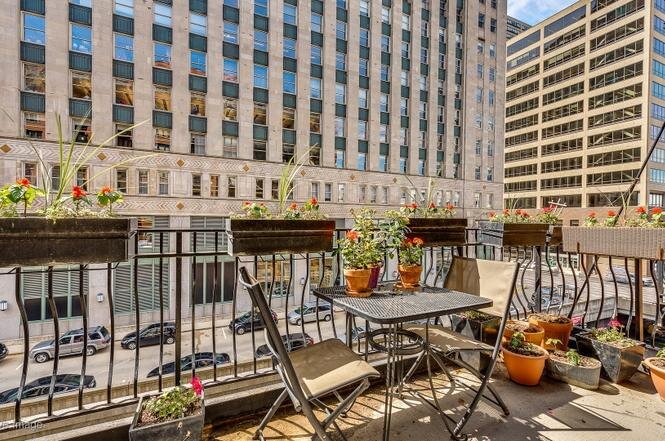
The newly renovated unit is located on the fourth floor of a converted factory building, complete with floor-to-ceiling views of the historic Merchandise Mart. The Mart’s façade provides a backdrop of weathered limestone and terracotta that serve as inspiration for matte-finished Artisan Grey quartz and honed Calacatta Apuano marble in the kitchen and living areas.

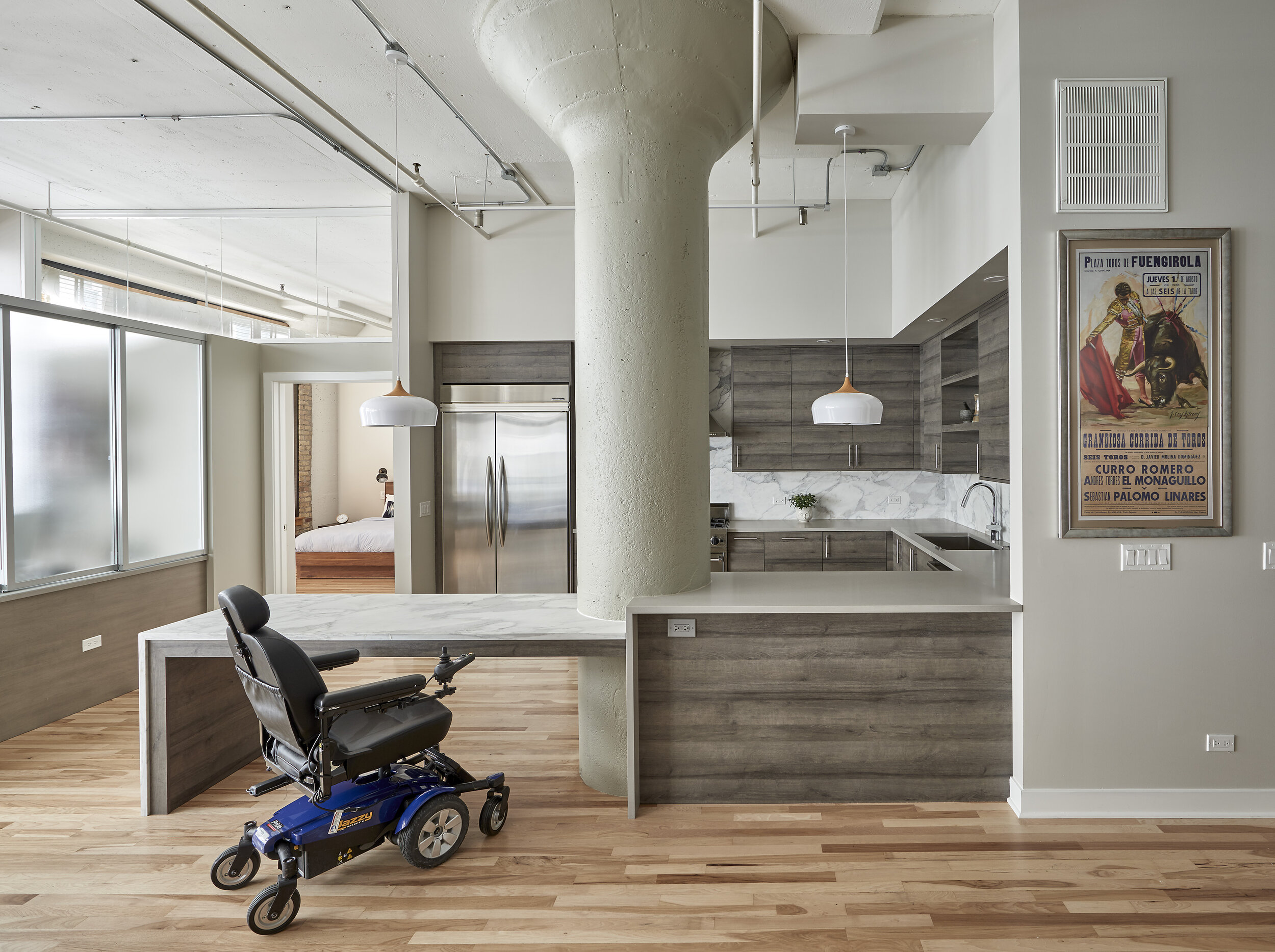
Merging industrial concrete elements with elegant waves of milky white, grey, and taupe veined marble, the condo pays homage to its landmark surroundings, while distinguishing itself as a contemporary, yet warm and comfortable home. The table height bar and eating area, ADA compliant cabinets and stainless sink all allow easy access, while integrating a gracious corner marble bookmatched backsplash, shelves and lighting. In other words, the home is Universal, yet sacrifices nothing in its aesthetic.
“Our condo does not look like it was made for someone who uses a wheelchair,” said Katy. “It flows, and there’s room to move. This is the heart of Universal Design. It works for everybody.”
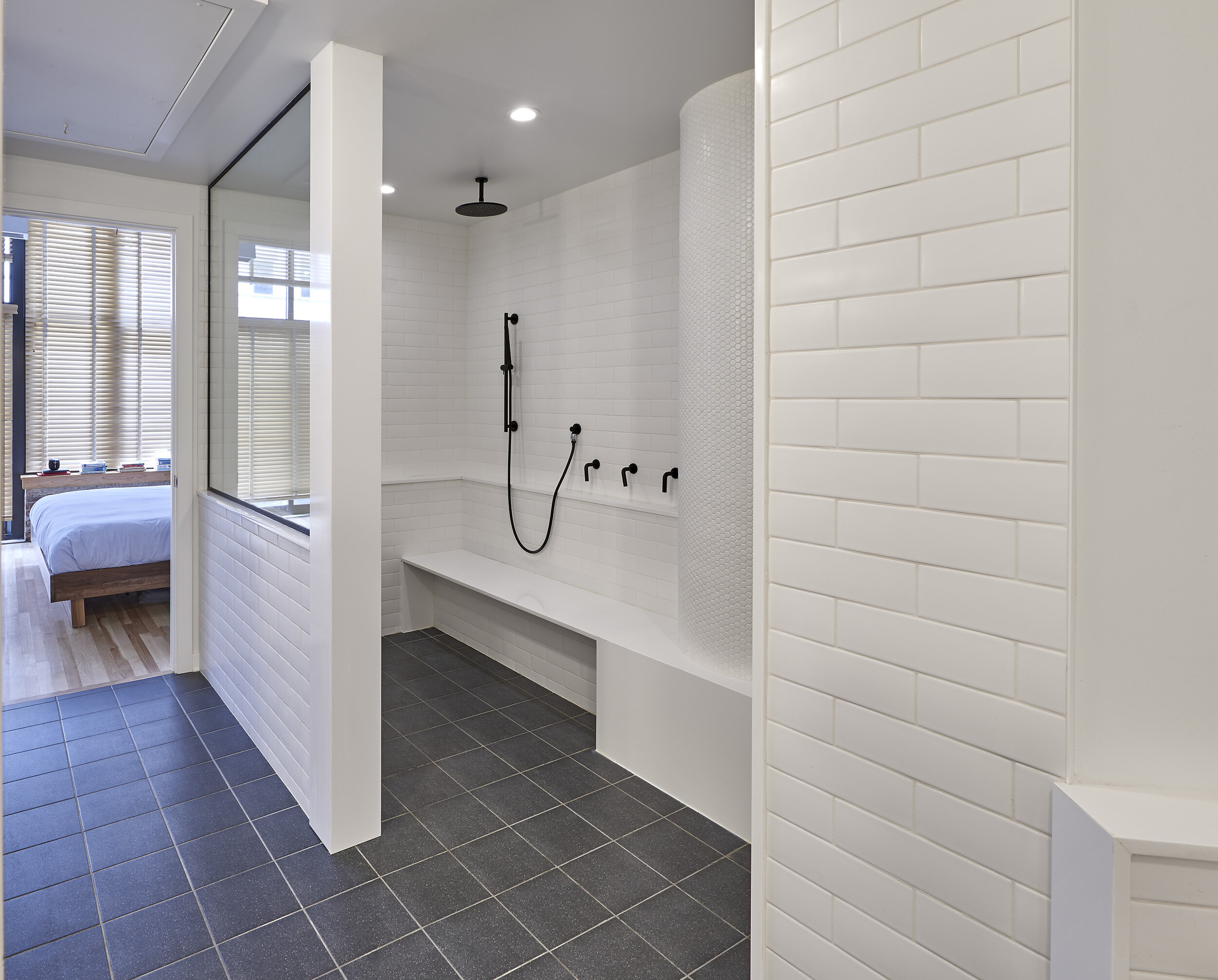
Take for example, the Master Bath. The walk-in shower, mitered sculptural bench, and floating vanities make it feel like a luxurious spa. But all these elements serve as important functions for Brad’s freedom of movement. The minimalist design of the low-maintenance Royal Blanc quartz shelving and ledges provide storage and accessibility and provide contrast to the high-durability Nero Erte porcelain floor tile. Each element complements another and works hard in both design and universality.
Universal Design inspires new inclusiveness in design and architecture to address individualized needs for comfort, style and harmony for all.

Kitchen Interior with quartz counters and marble full high splashes.

Bi-level Kitchen Bars in marble and quartz

Shower Area with Sculptural Quartz Bench, elongated Powder Subway Brick, Hexagon Penny Rounds and Nero Erte Floor Tile.

Master Bath Overview with Royal Blanc Quartz Counters, Columns, and Accessories, with Nero Erte Matte Porcelain Tile
Marble, Quartz and Tile by Blue Pearl Stone Photography by Tony Soluri

What is The Most Famous Stone in the World?
What is the Most Famous Stone in the World?
What natural material is prized by artists, has been used in the grandest buildings around the world for over two thousand years, and is still the most sought after look in design today?
You guessed it. Marble from Carrara! That's Carrara (not Carrera.)
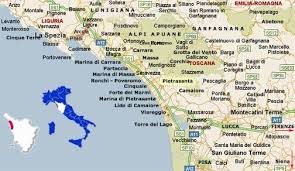
Carrara Marble comes from the comune of Carrara in the province of Massa and Carrara located in the north west part of Tuscany, Italy some some 62 miles north-west of Florence.
There were known settlements in the Carrara area as early as the 9th century BC, when the Apuan Ligures lived in the region. The current town originated from the borough built to house workers in the marble quarries created by the Romans after their conquest of Liguria in the early 2nd century BC. Marble was exported from the nearby harbour of Luni at the mouth of river Magra.

Statuario Extra Marble from Carrara at Blue Pearl
Borings show that the Apuan mountains of Carrara are made up of almost 100 percent marble that extends more than 500 feet underground and continues unimpeded to the top of the mountains at 5500 feet above sea level.There are at least 650 original quarry sites, and as many variations. Approximately half are still in production today. There is more Carrara marble in use in the world than any other marble.

Inside a Carrara Mountain
The prize yields from Carrara Quarries are Statuario, Calacatta, and Carrara each with the white background and classic blue gray hues. Visit Blue Pearl to see these and many other materials from the Carrara Region.

Carrara Marble at Blue Pearl

Calacatta Apuano at Blue Pearl.
Michaleangelo was one of the first modern artist savants to realize the superior quality and extent of the beds. Many masters went on to start studios in Carrara, some of which exist today.
a marble studio in Carrara
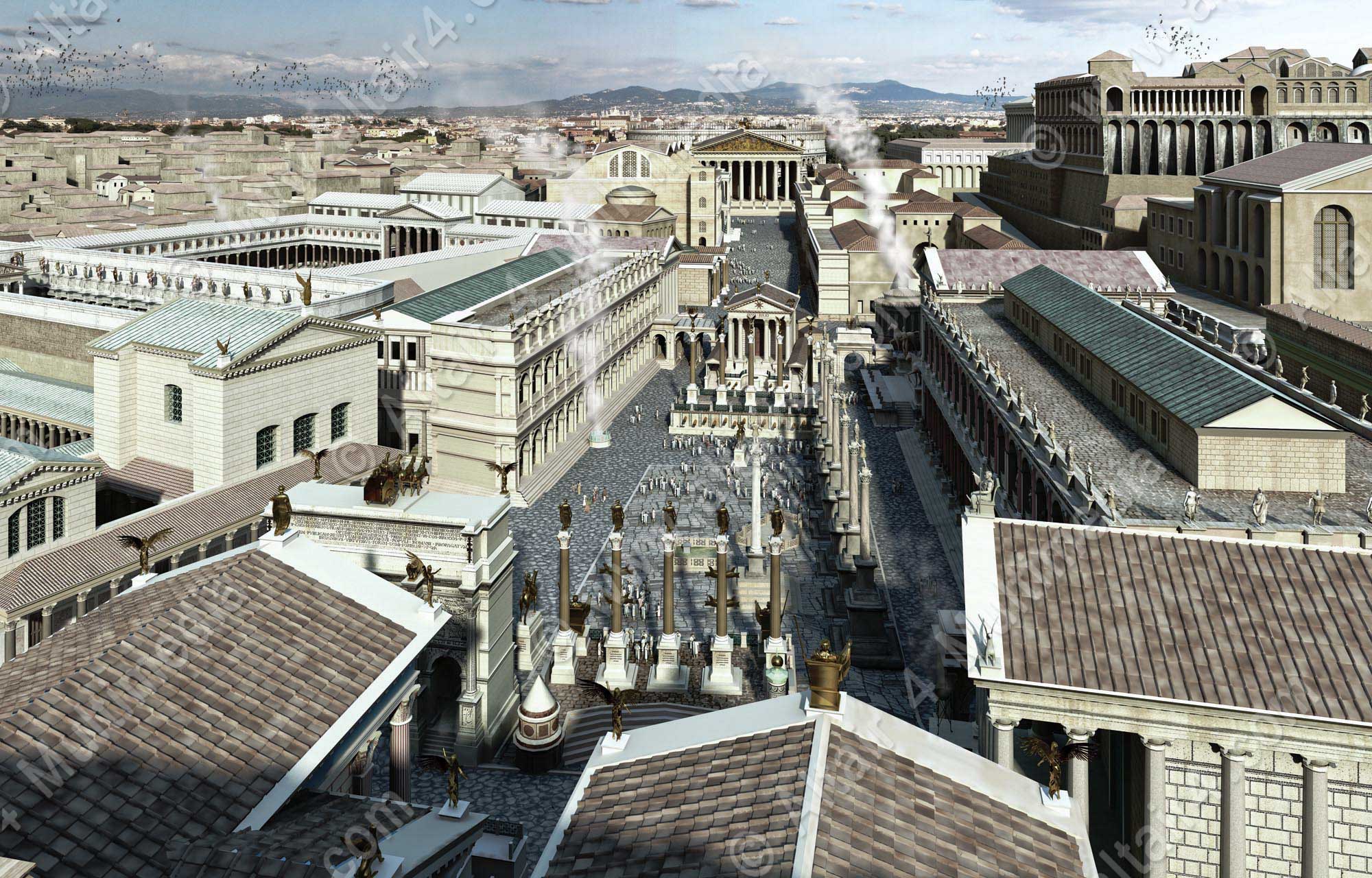
The Forum in Rome depicted as it once looked 2000 years ago clad in Carrara Marble.
Famous buildings incorporating Carrara Marble
· The Pantheon
· Michelangelo's David (1501–04)
· Some sections of the Palace of the Marqués de Dos Aguas, Valencia, Spain
· Prem Mandir, Vrindavan, Uttar Pradesh, India
· Duomo di Siena, Siena, Italy
· Sarcophagus of St. Hedwig, Queen of Poland, Cracow, Poland
· Manila Cathedral (interior), Manila, Philippines
· First Canadian Place, Toronto, Ontario, Canada
· Sheikh Zayed Mosque, Abu Dhabi, UAE
· Harvard Medical School buildings, Boston, Massachusetts, USA
· Oslo Opera House, Oslo, Norway
· Normandy American Cemetery and Memorial (Crosses and Stars of David), France
· Peace Monument, Washington, DC, USA
· King Edward VII Memorial, Birmingham, UK
· Akshardham, Delhi, India
· Milwaukee Art Museum, Milwaukee, Wisconsin, U.S.
· Robba Fountain, Ljubljana, Slovenia
· Finlandia Hall, Helsinki, Finland
· Devon Tower, Oklahoma City, Oklahoma, USA
· The Rotunda (University of Virginia), Charlottesville, Virginia, USA
· Palacio Legislativo (Uruguay), the seat of the Uruguayan Parliament

Teresa at a Quarry in Northern Italy.

New Arrivals
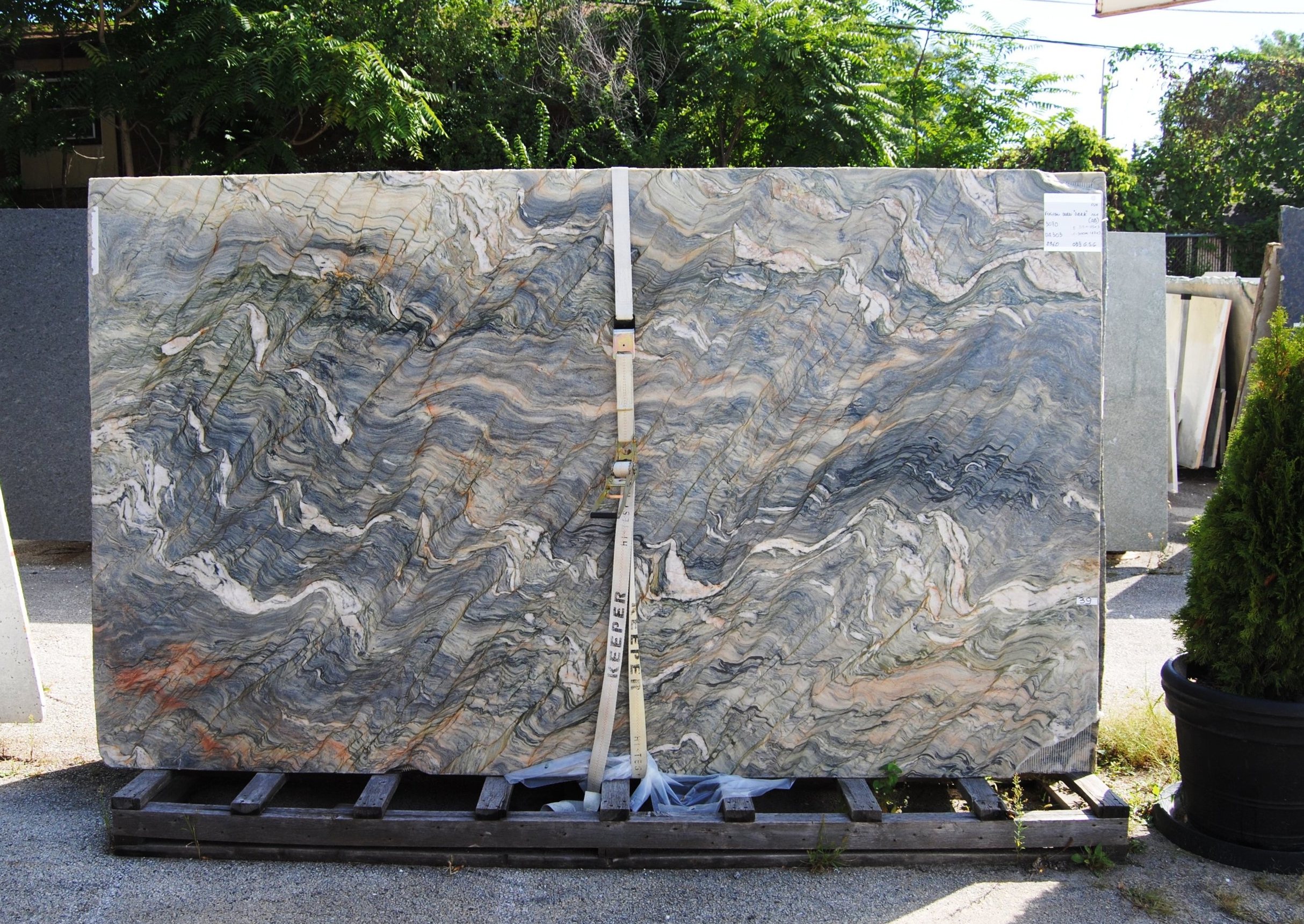
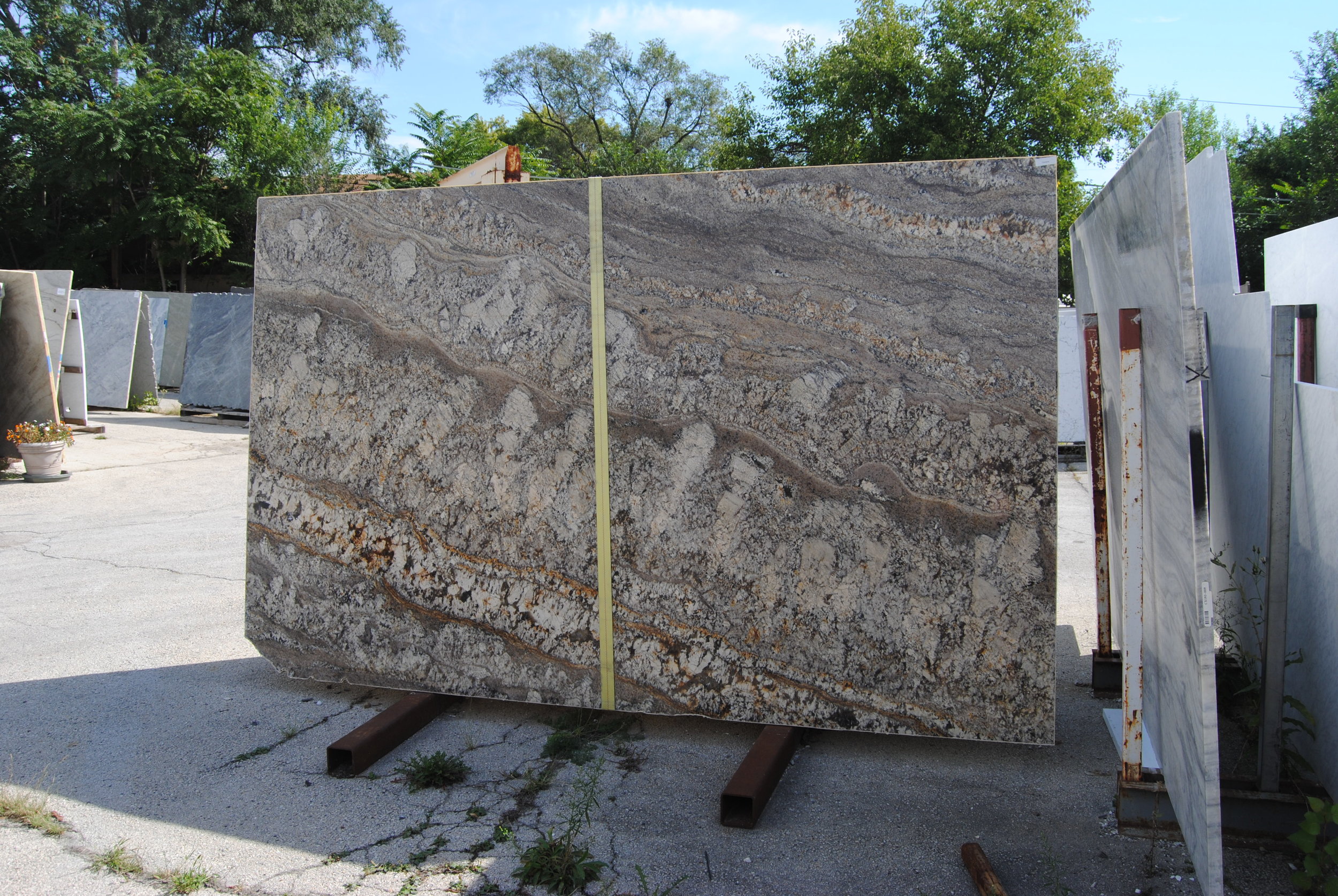
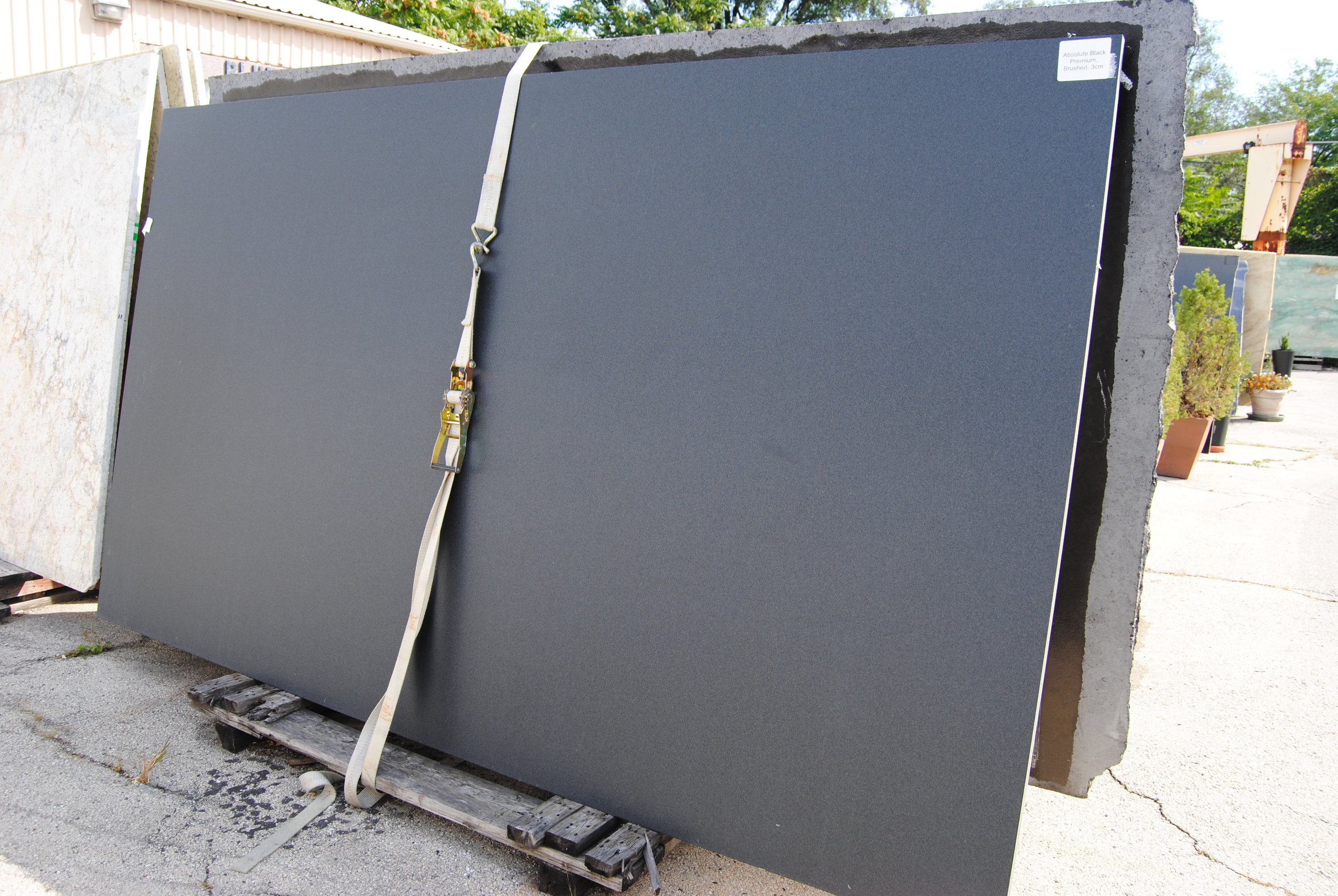
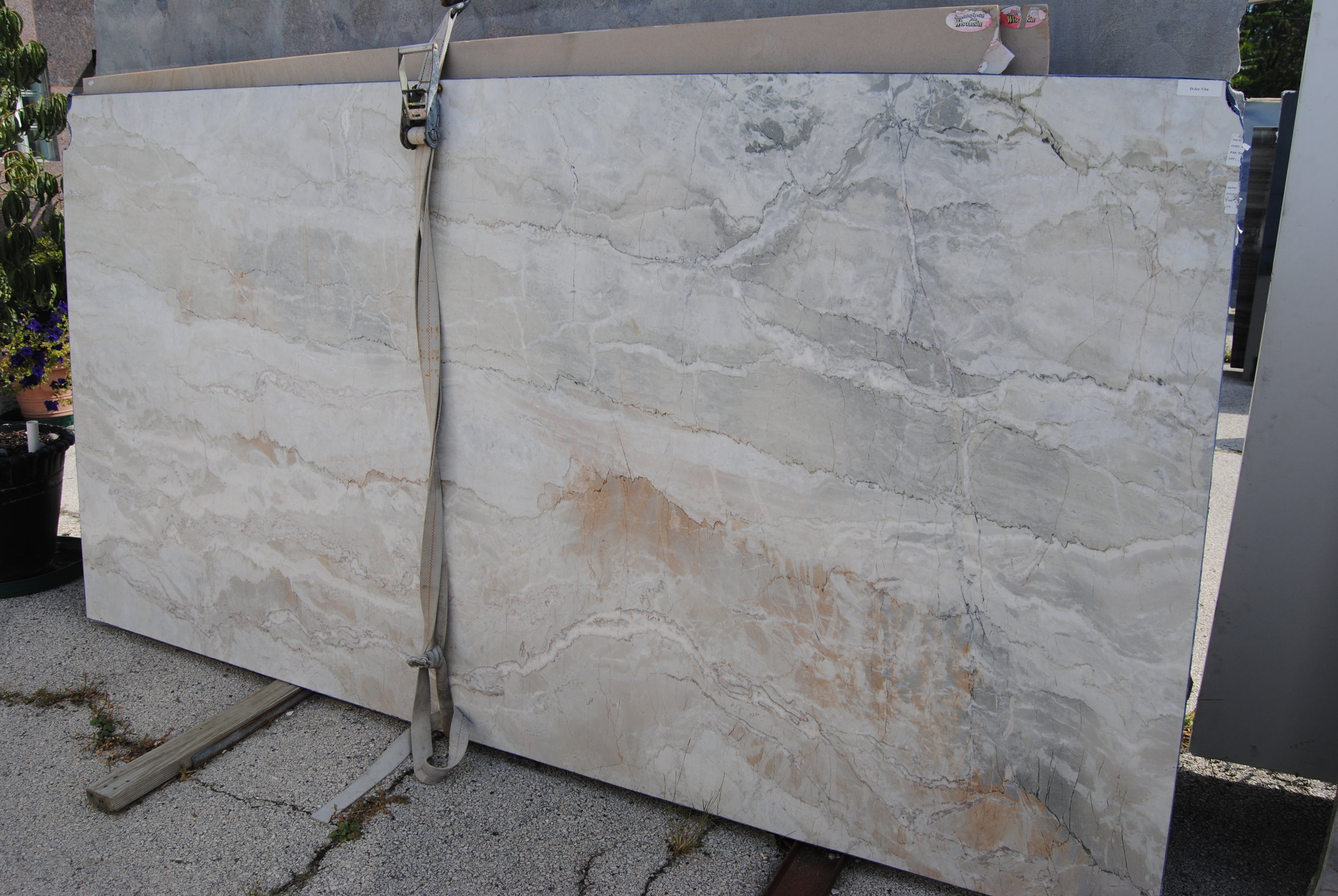
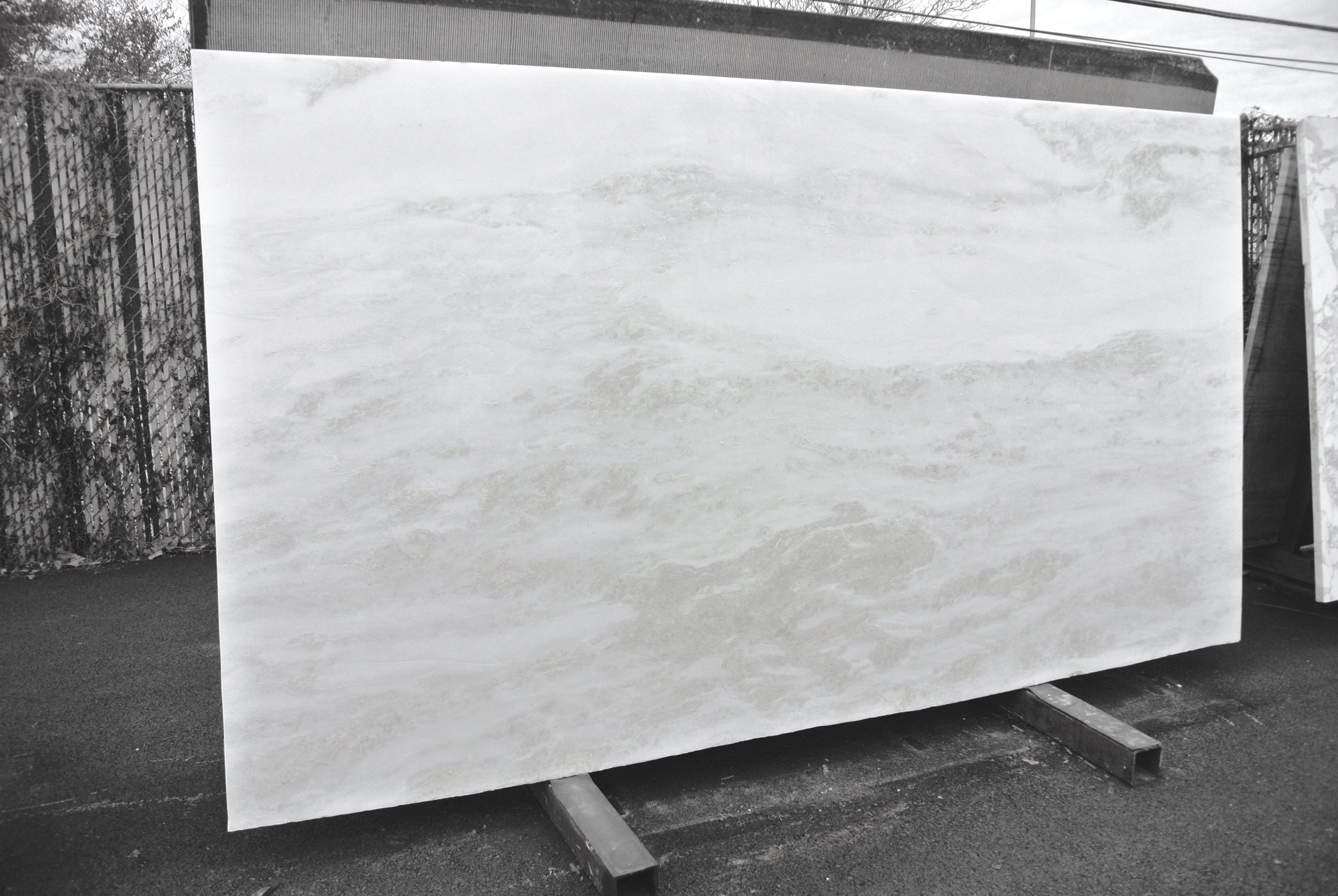
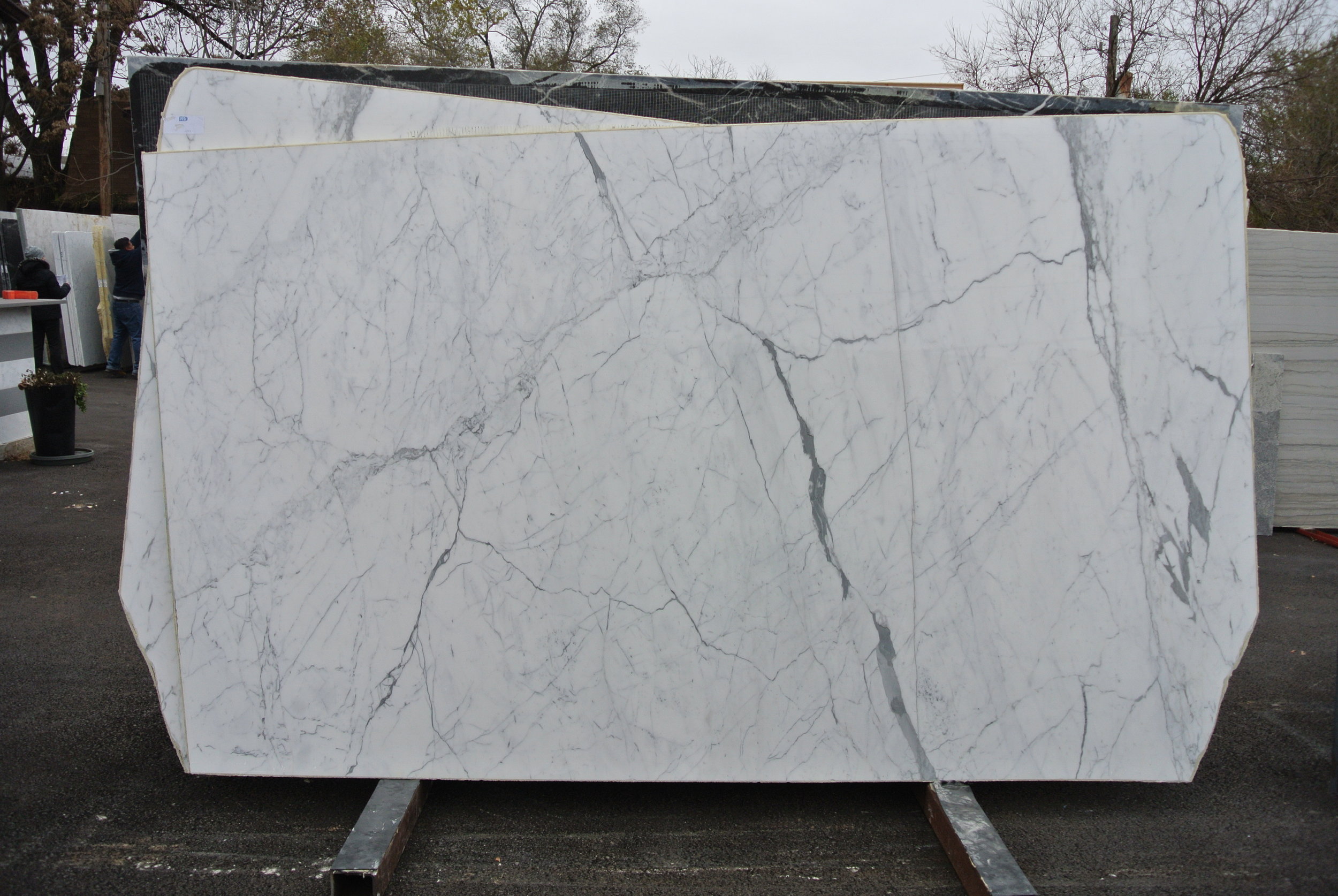
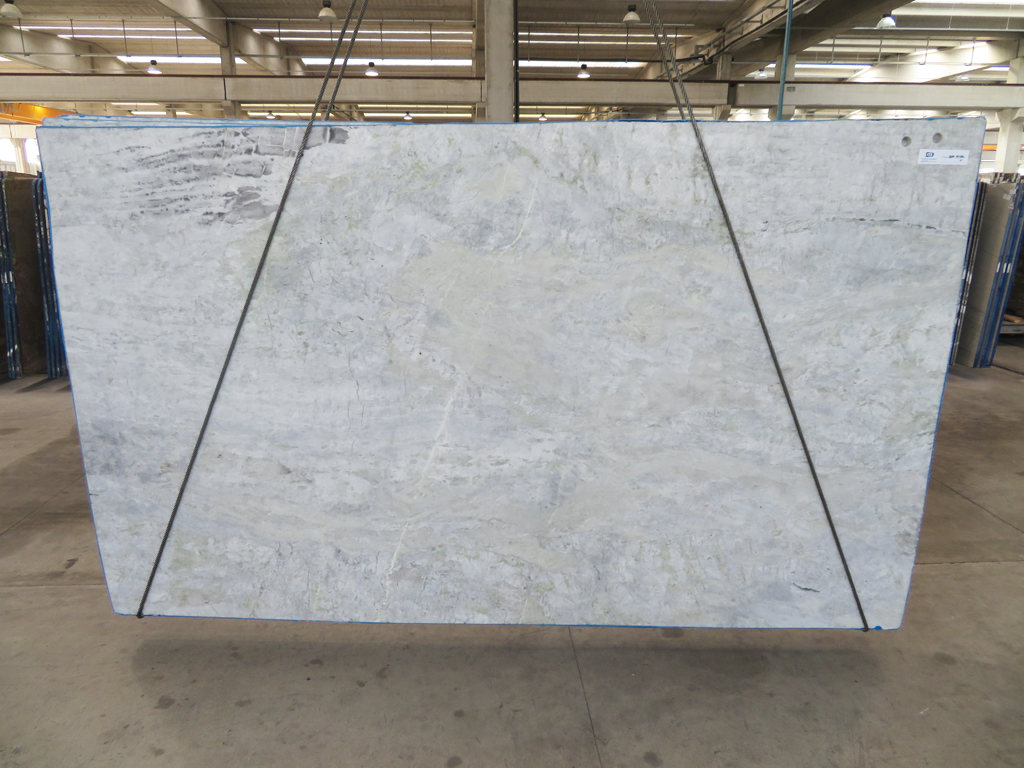
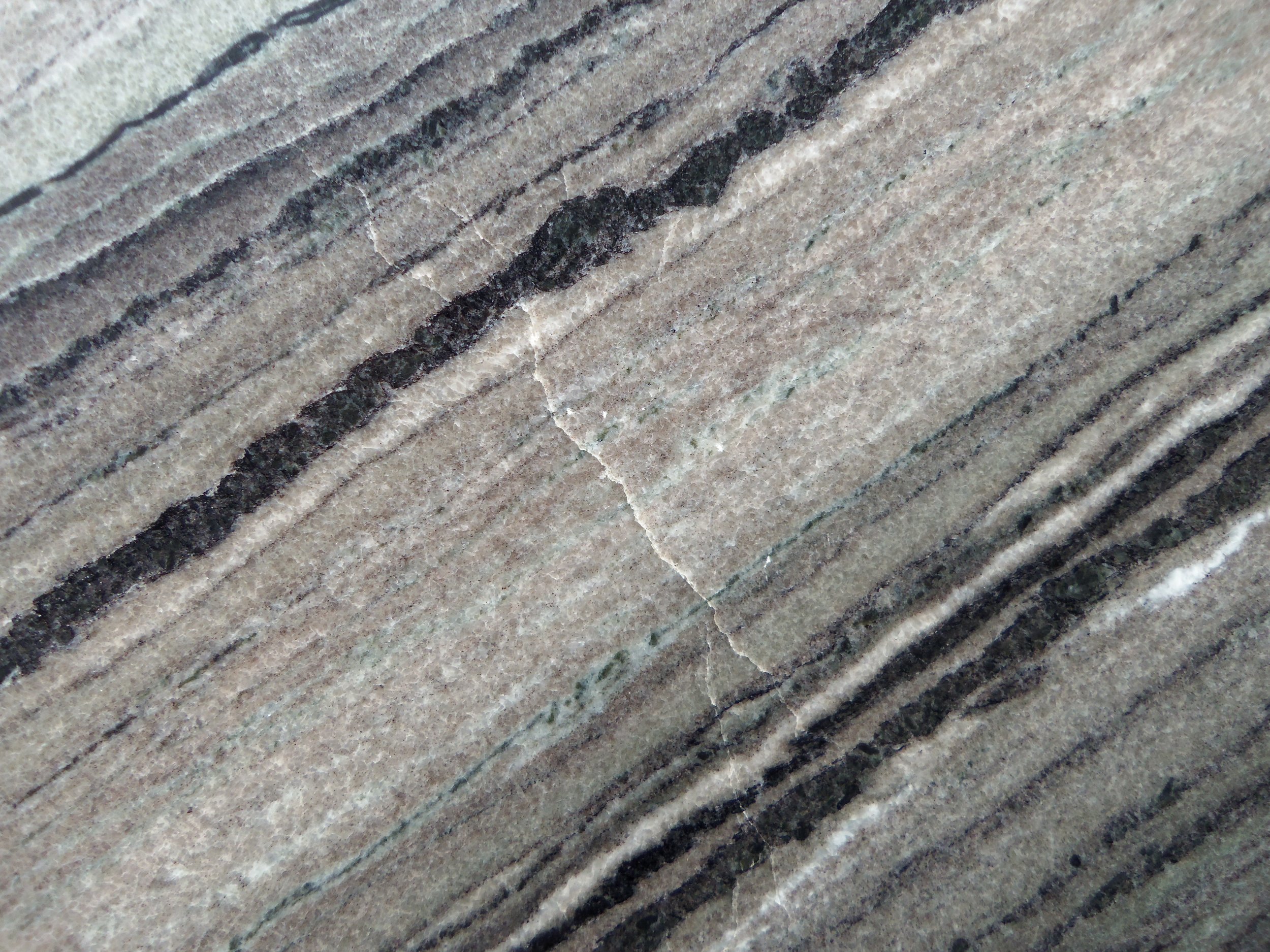
We are excited to share with you some of our latest arrivals that include these fifteen beautiful marble, granite, quartzite and specialty slabs.
We are excited to share with you some of our latest arrivals that include these fifteen beautiful marble, granite, quartzite and specialty slabs.
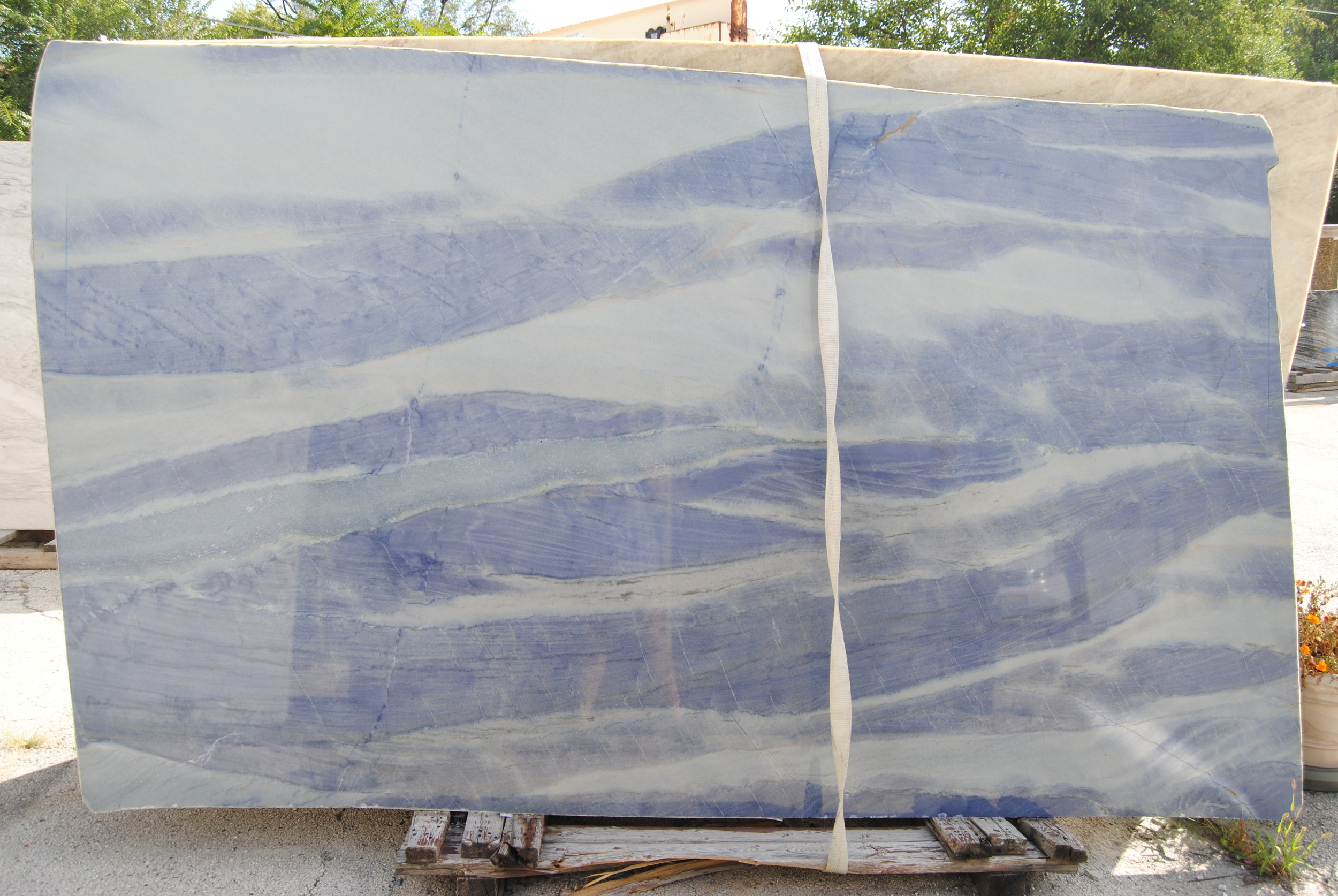
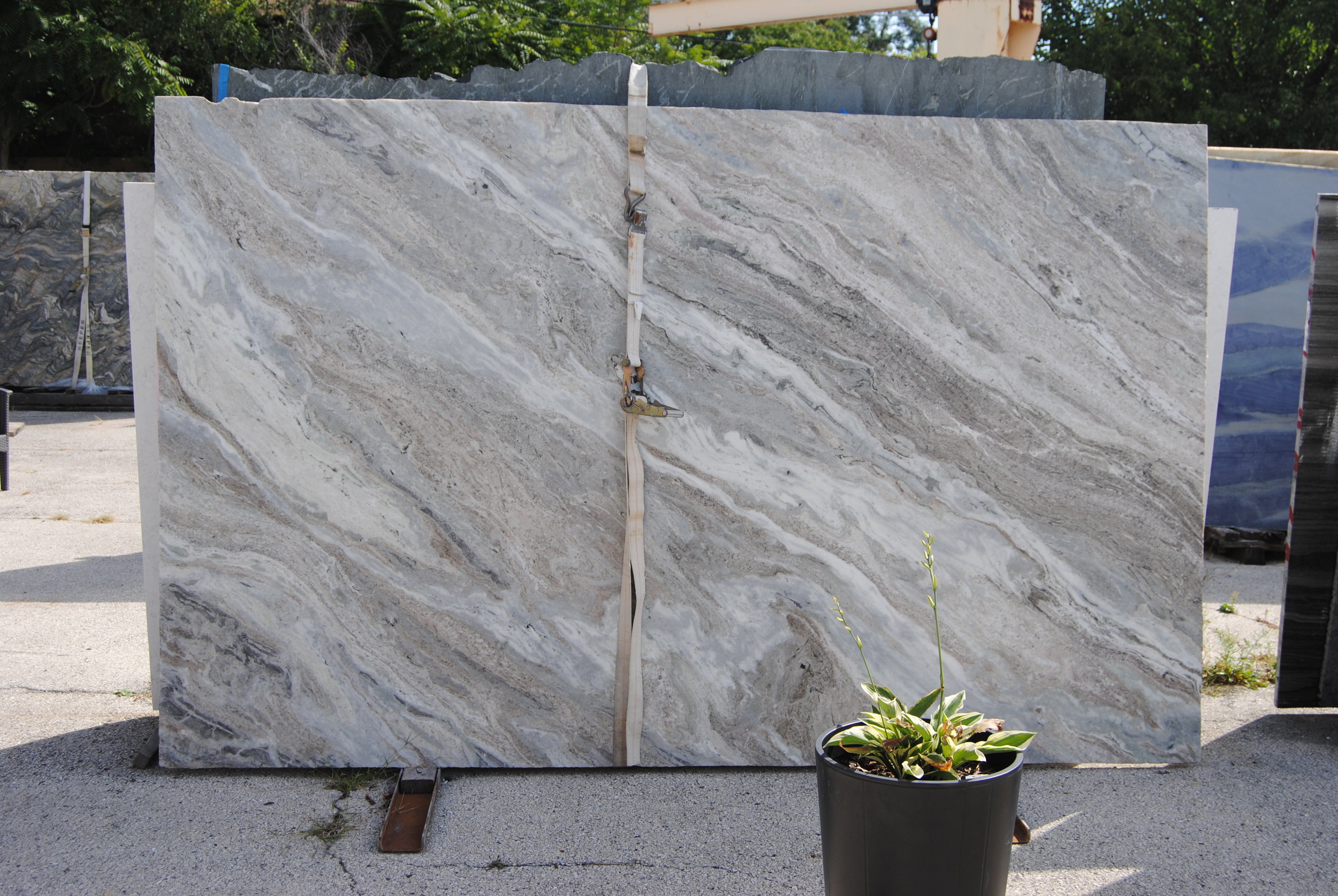
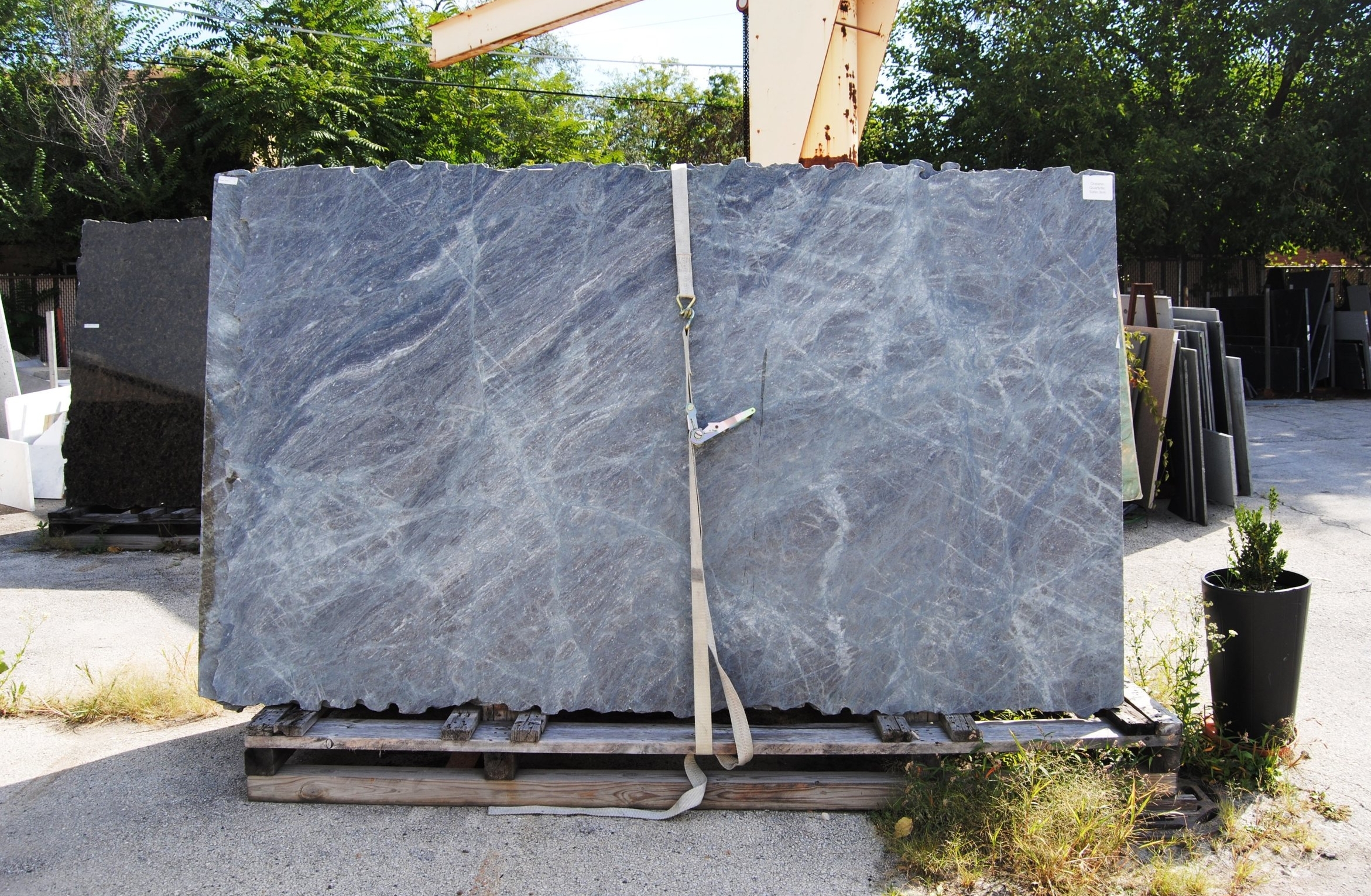


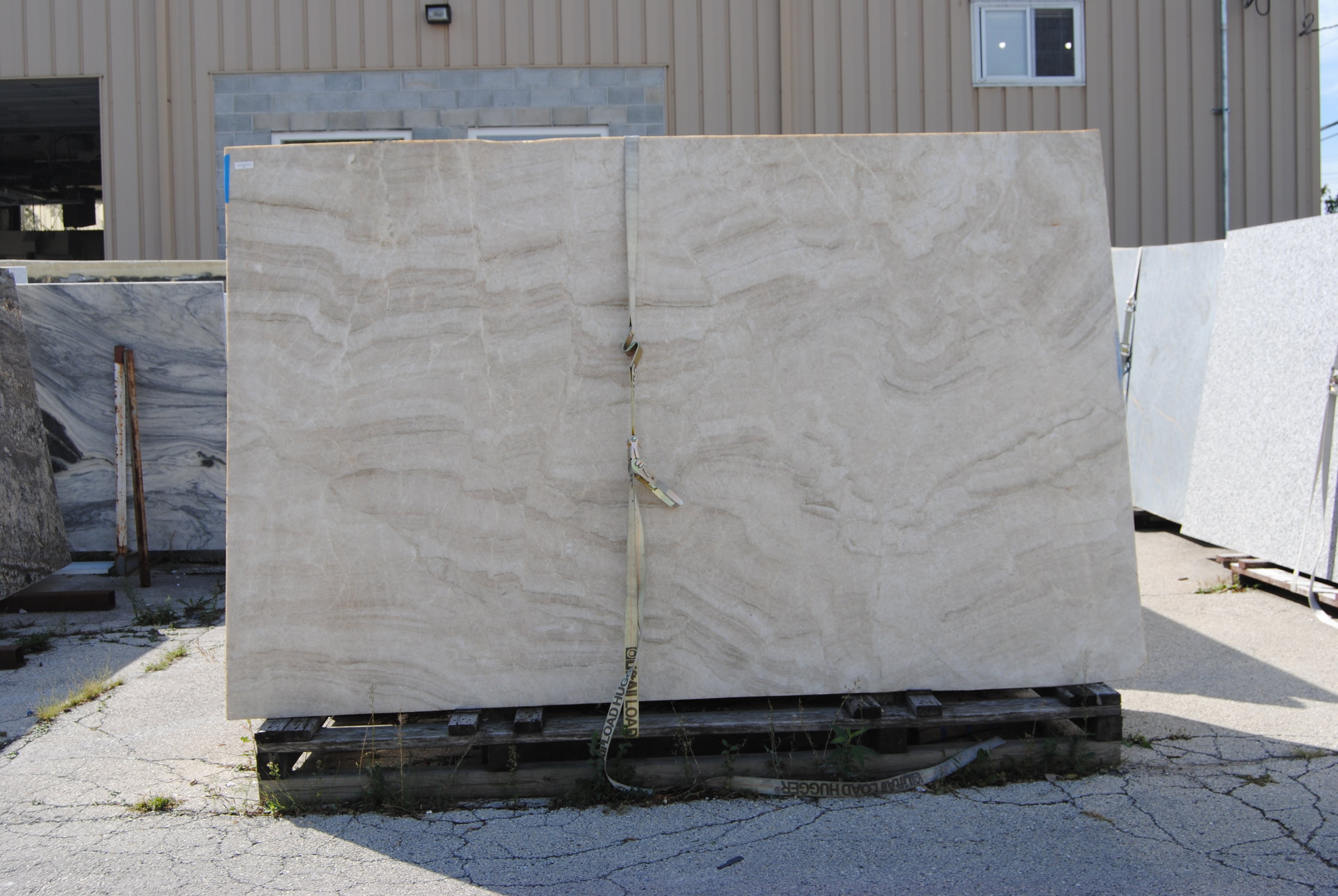
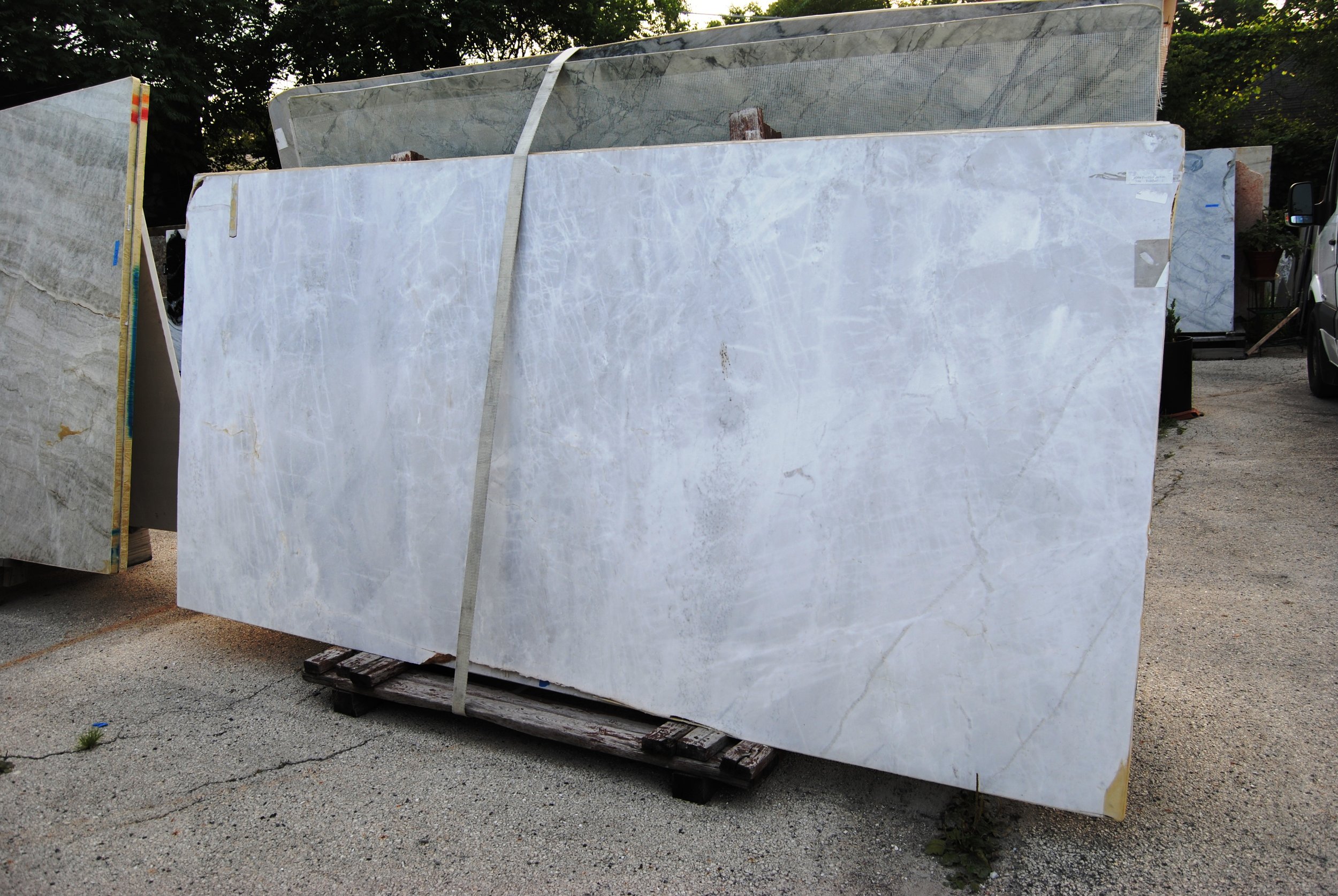
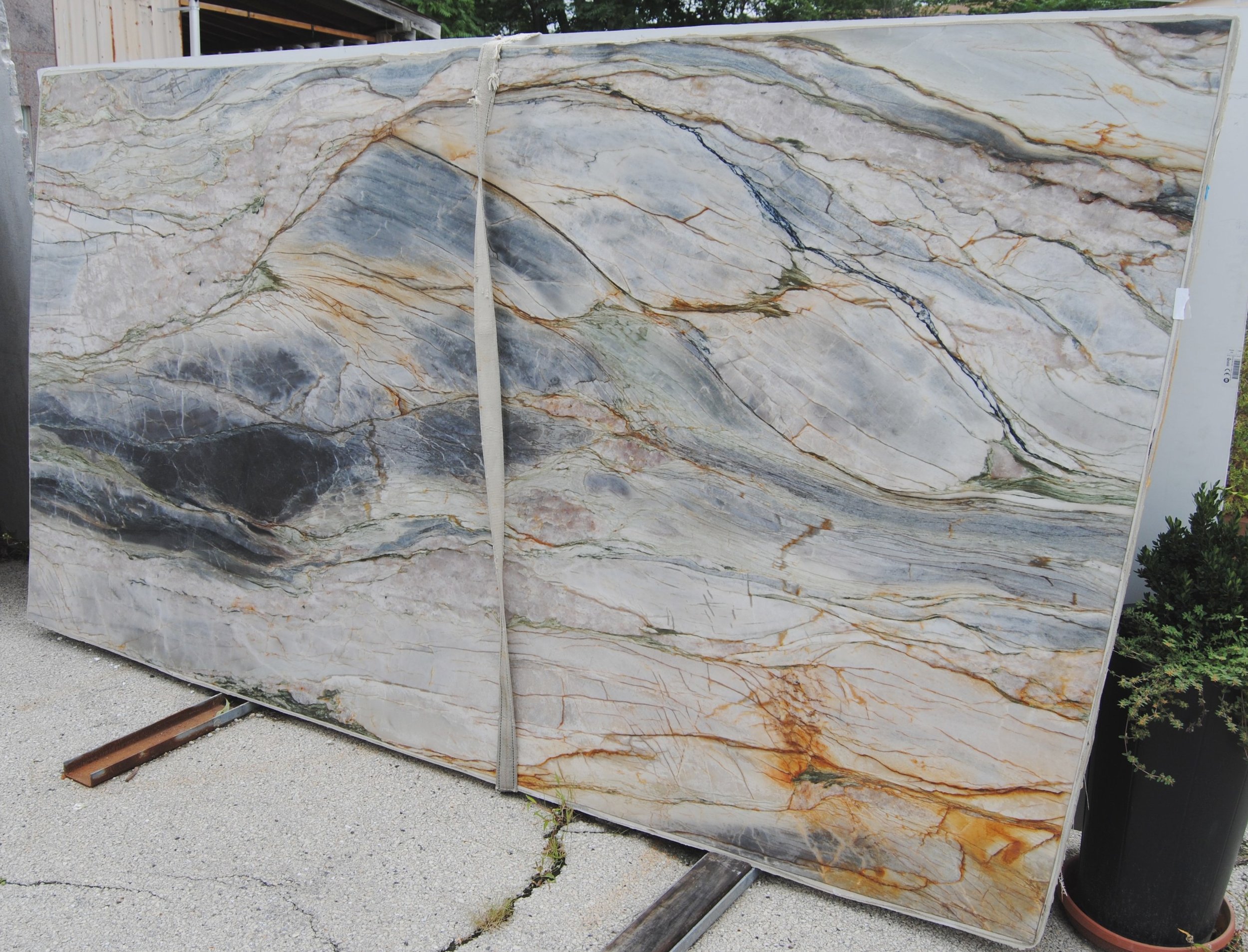
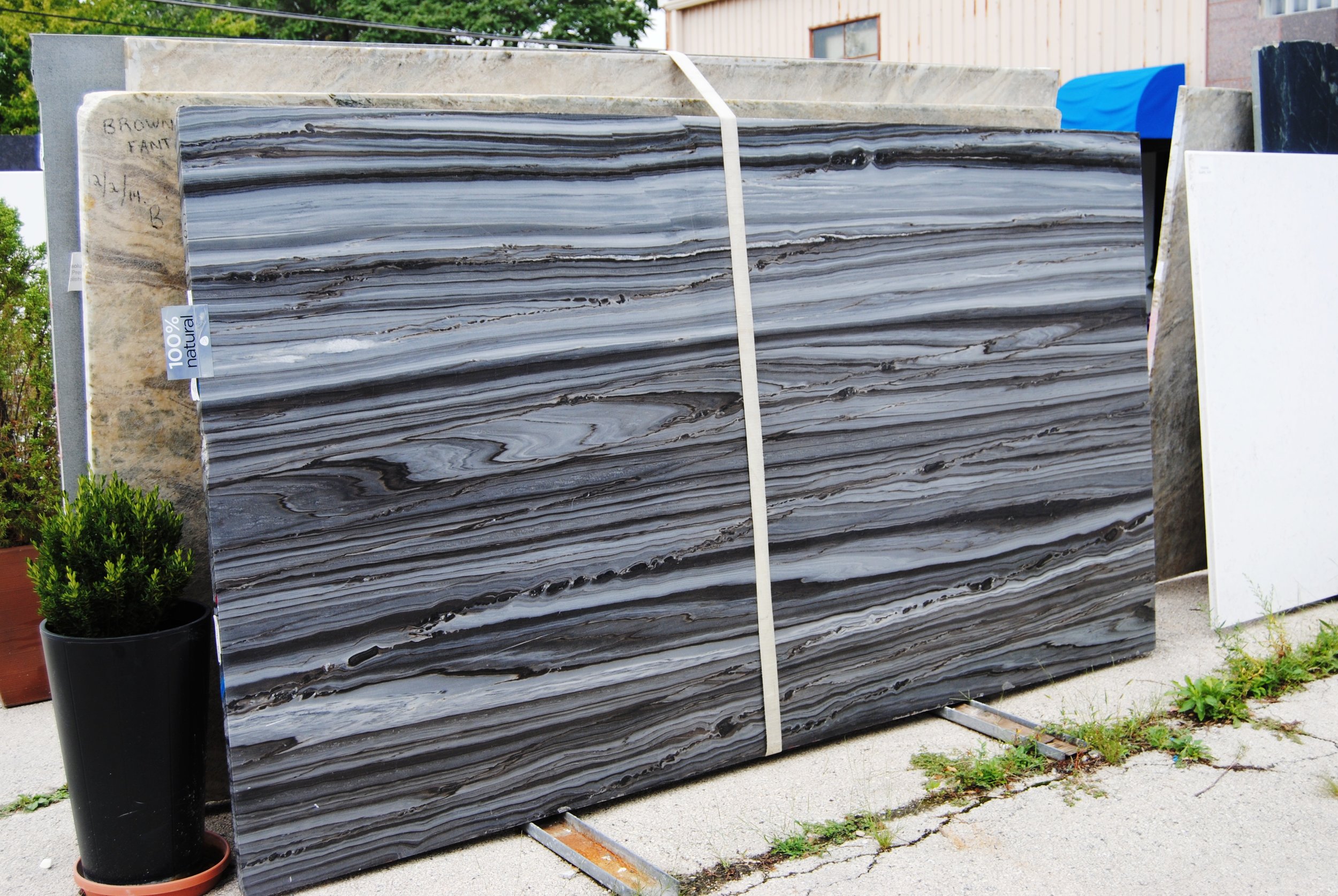
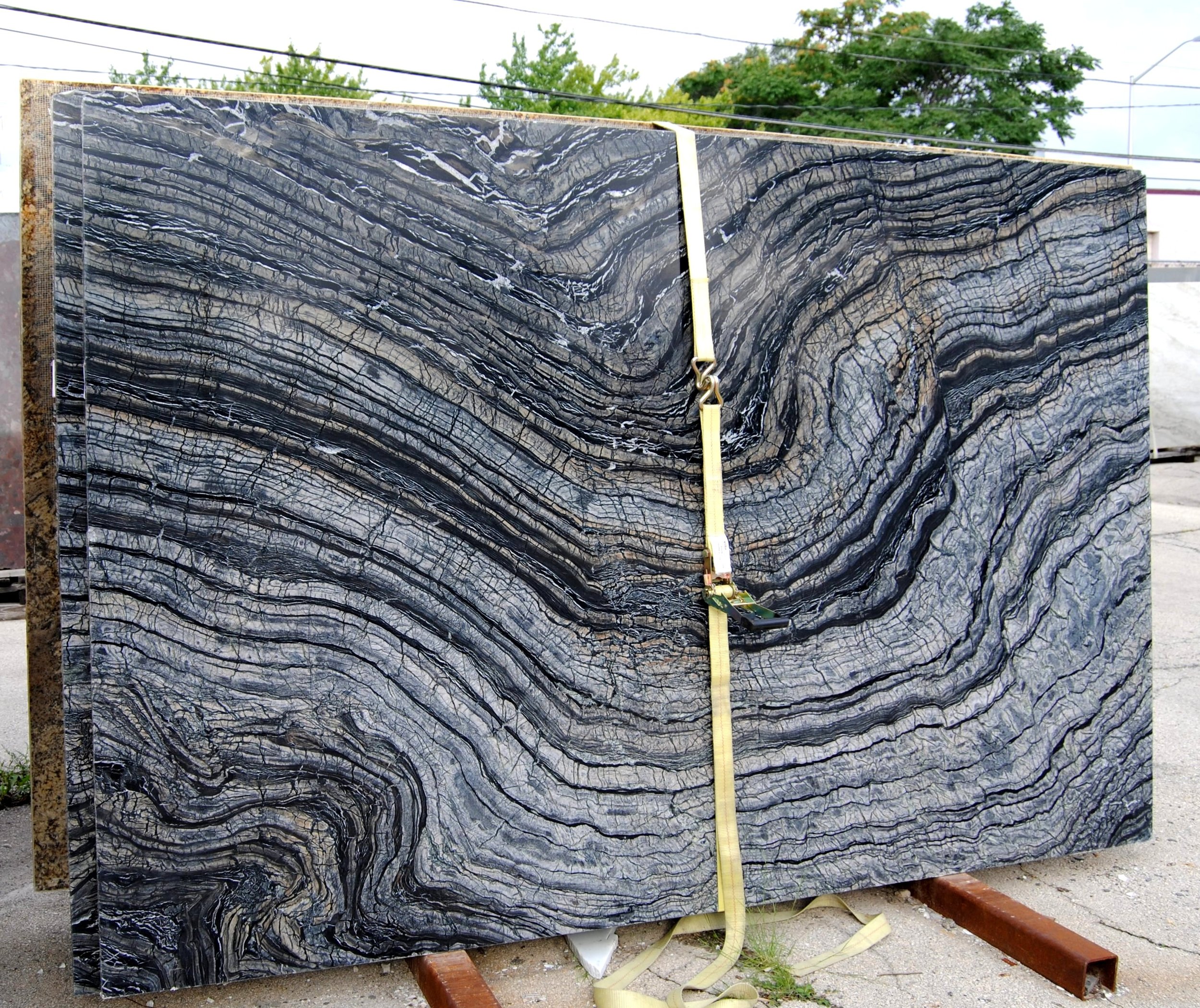
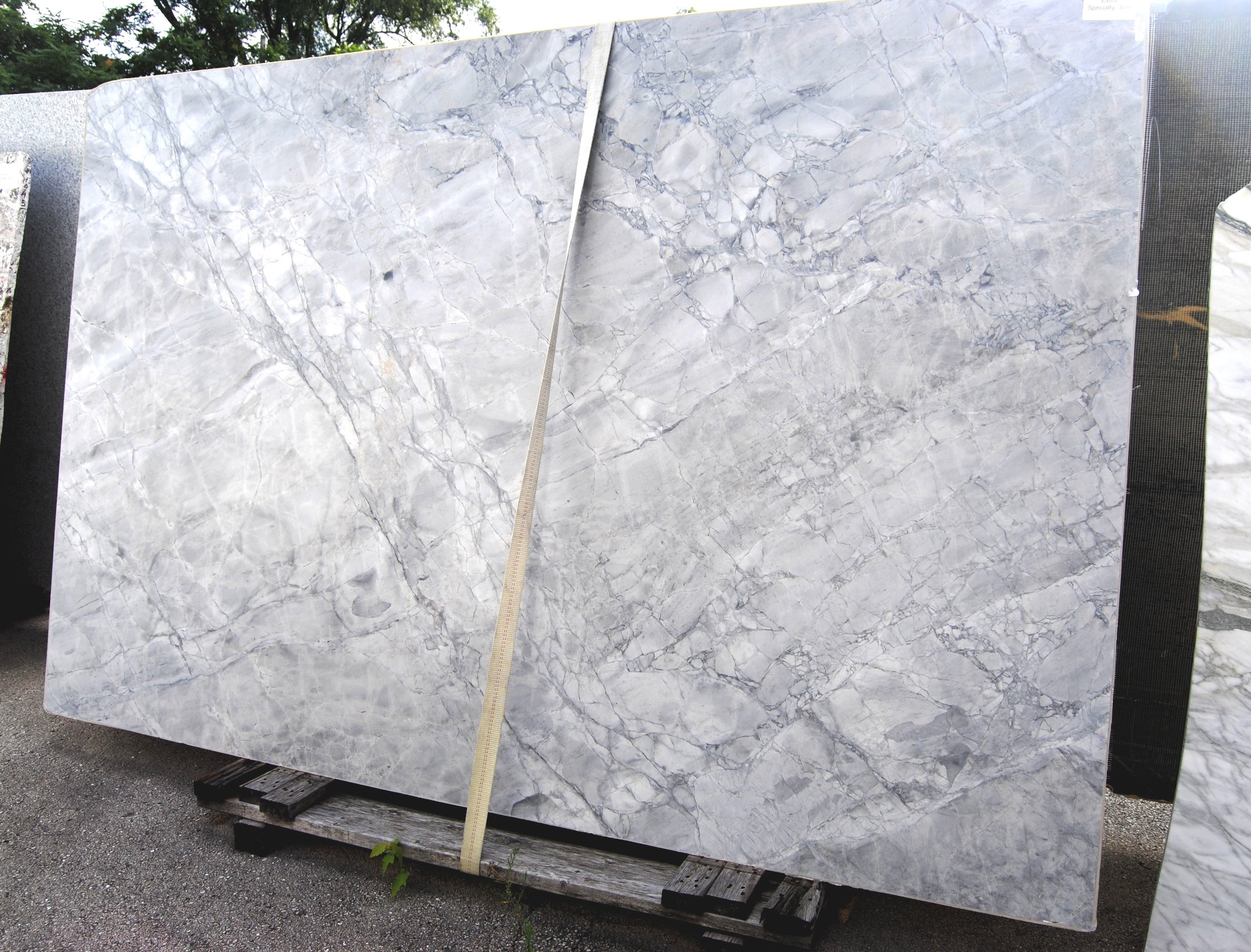
Come visit us in La Grange to see our colorful selection or email us any time. For more information please see our Contact page.
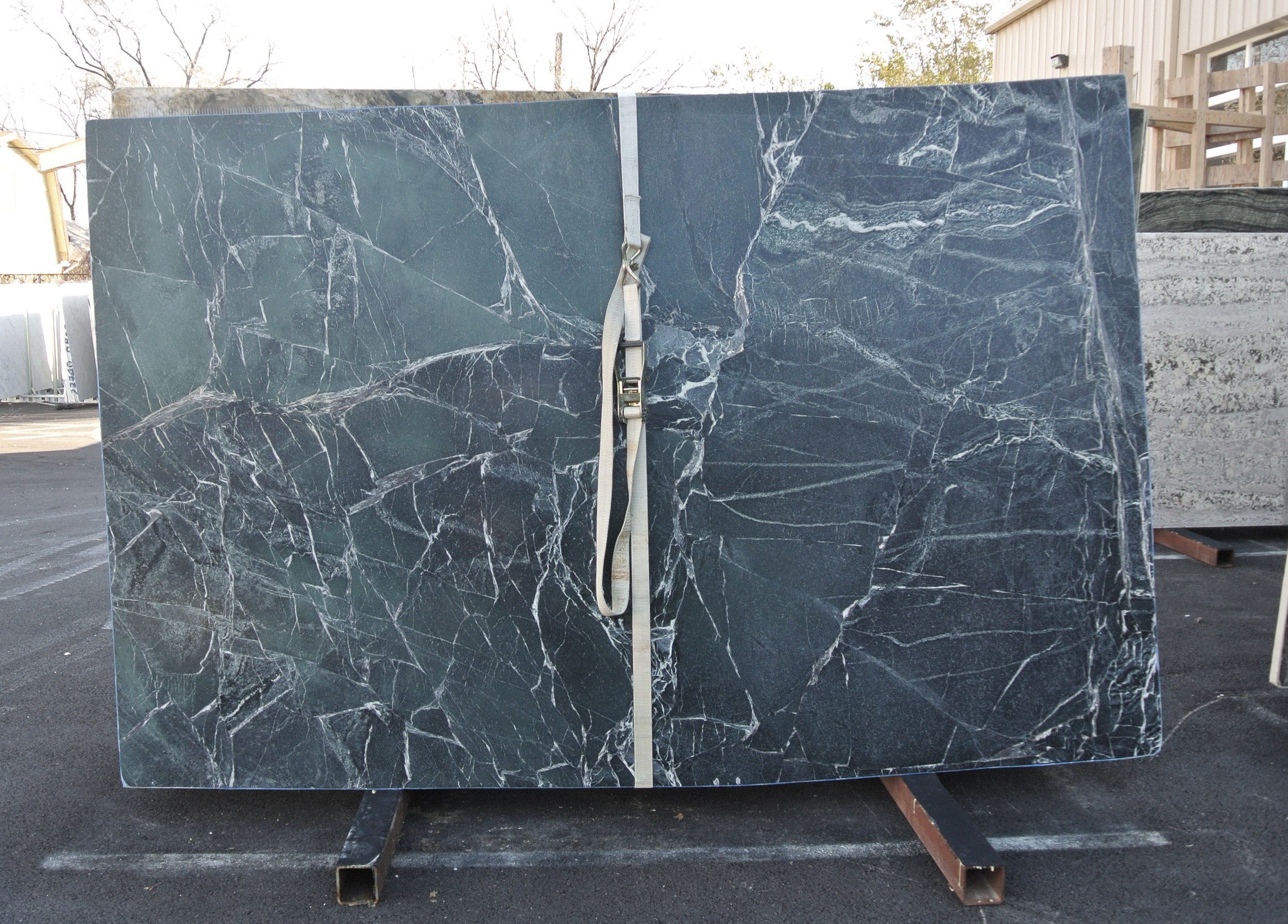
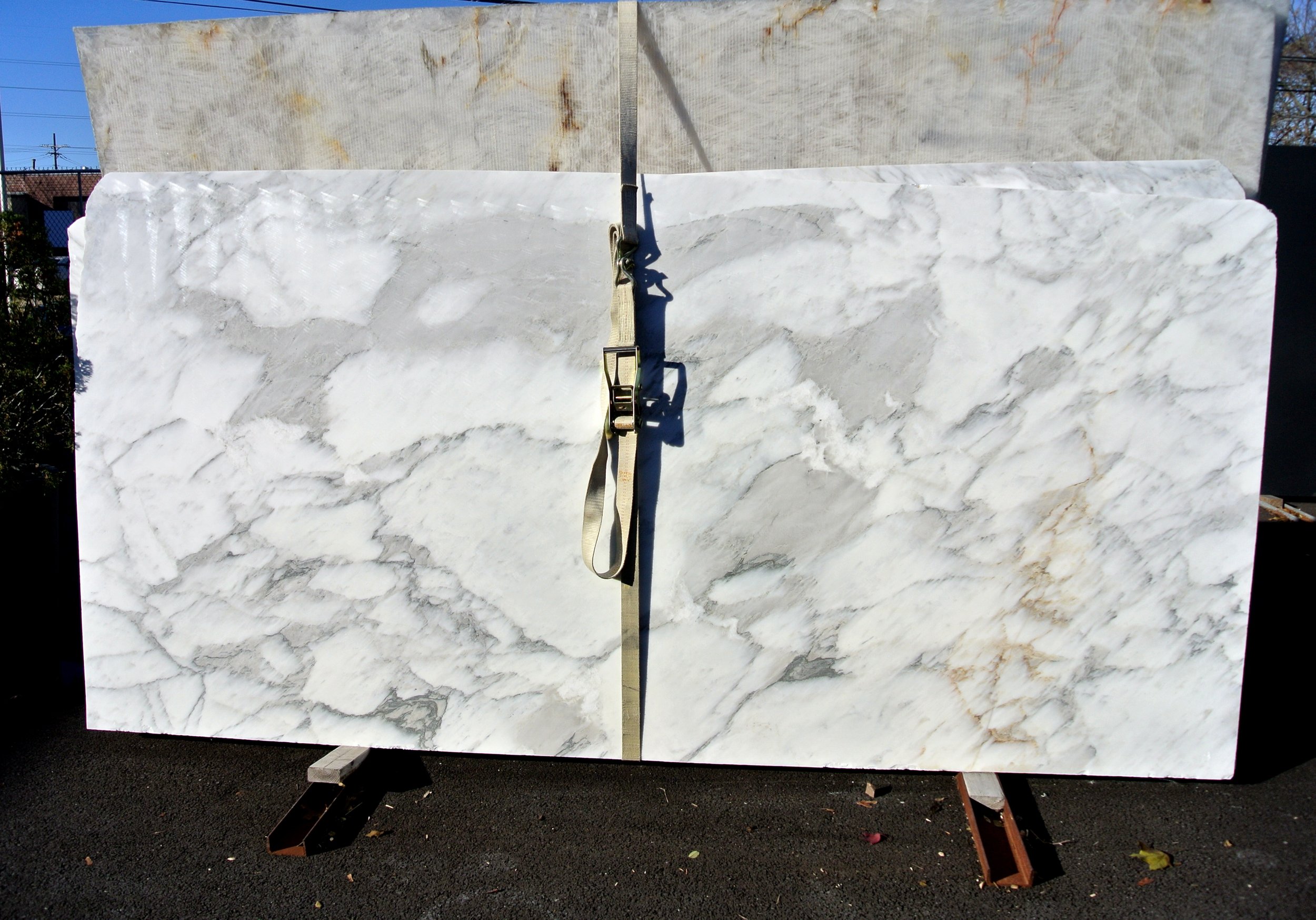
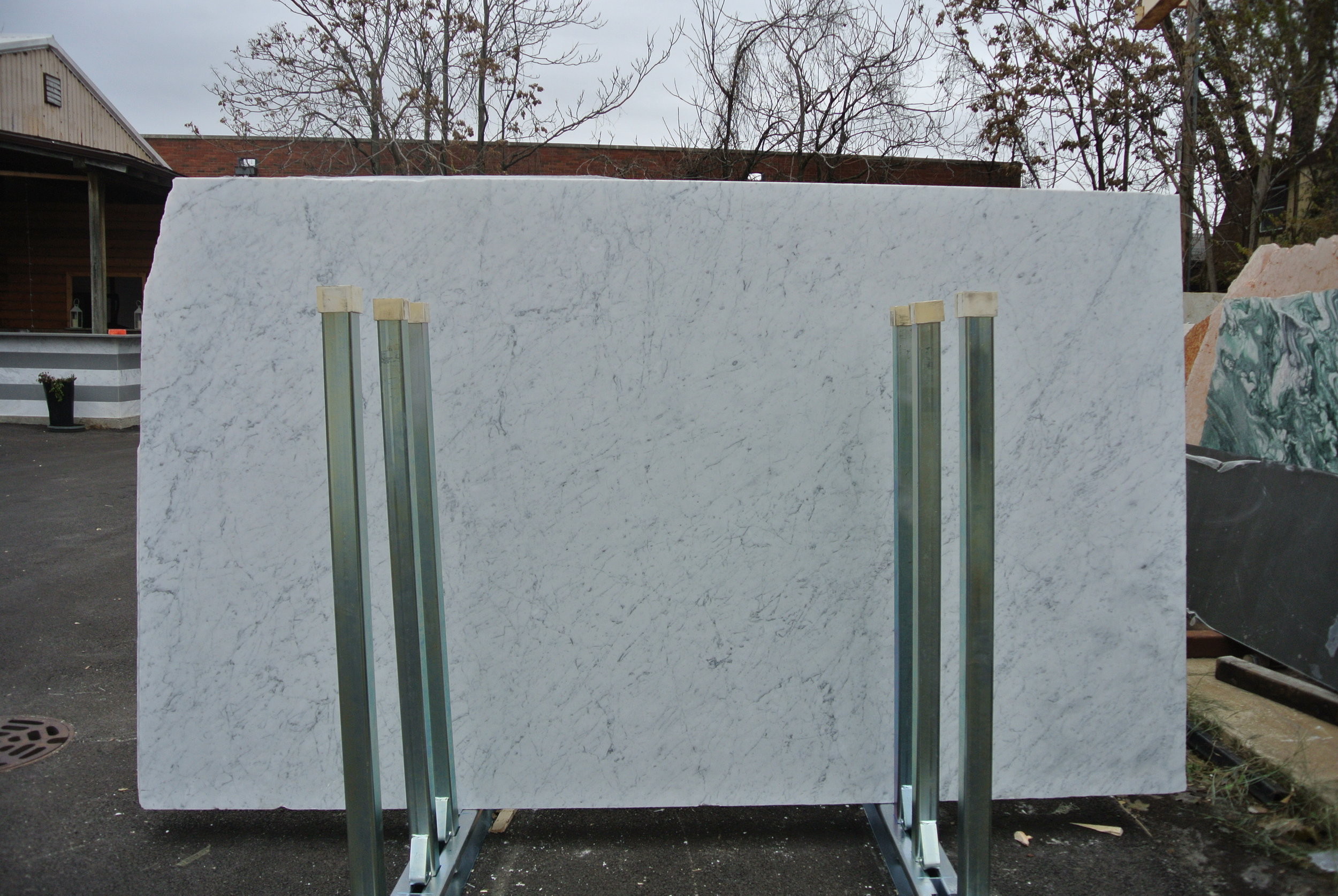

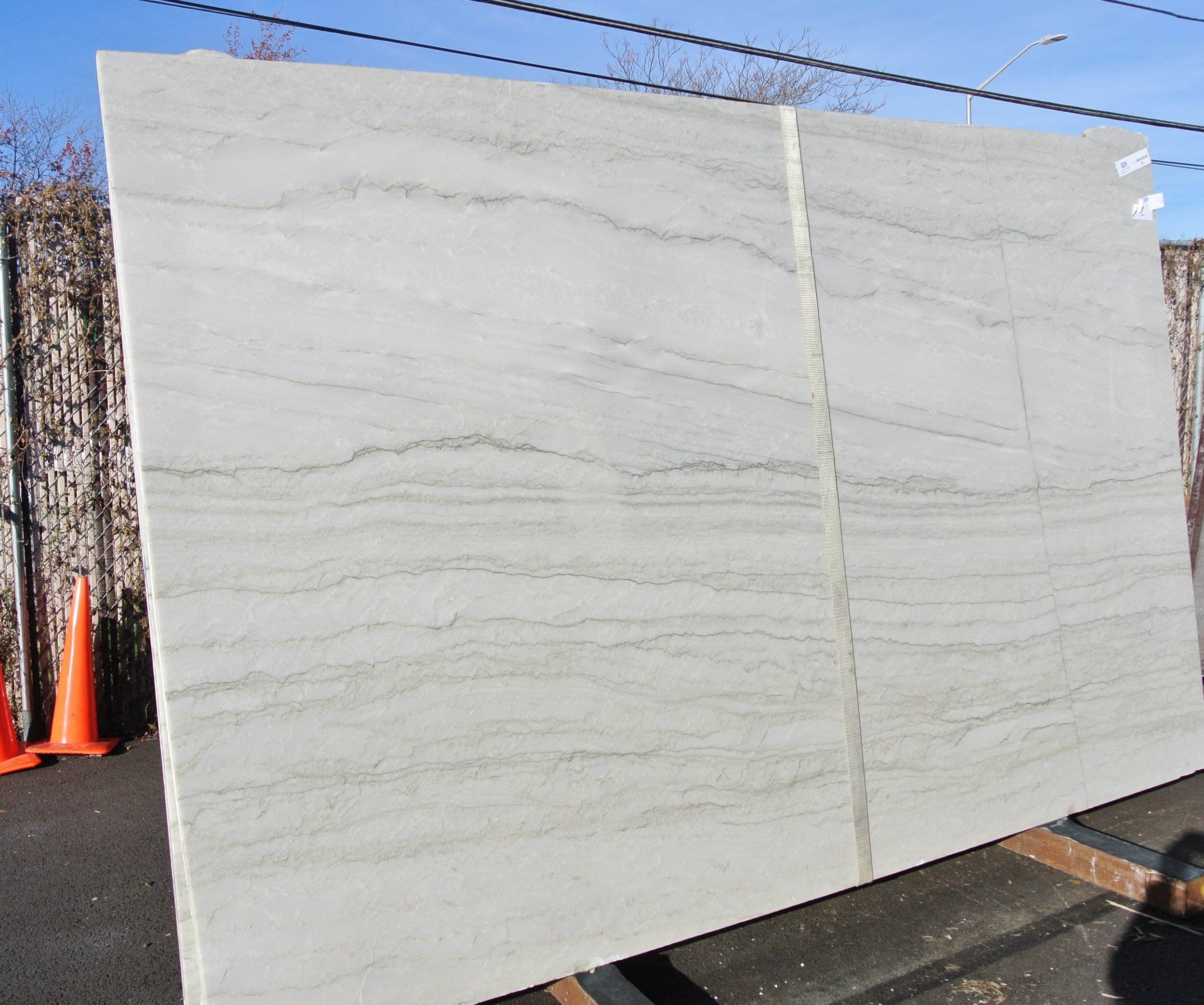
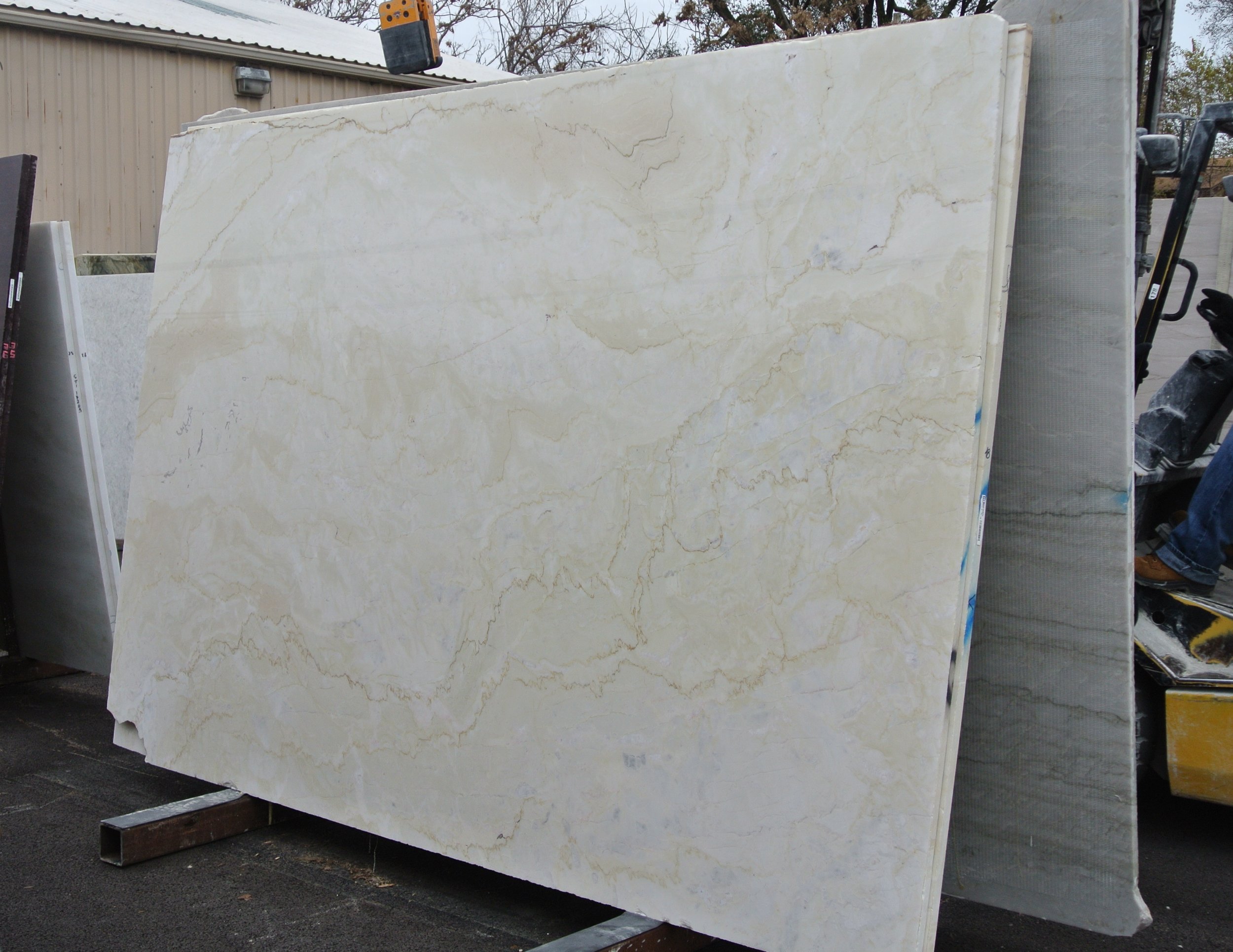
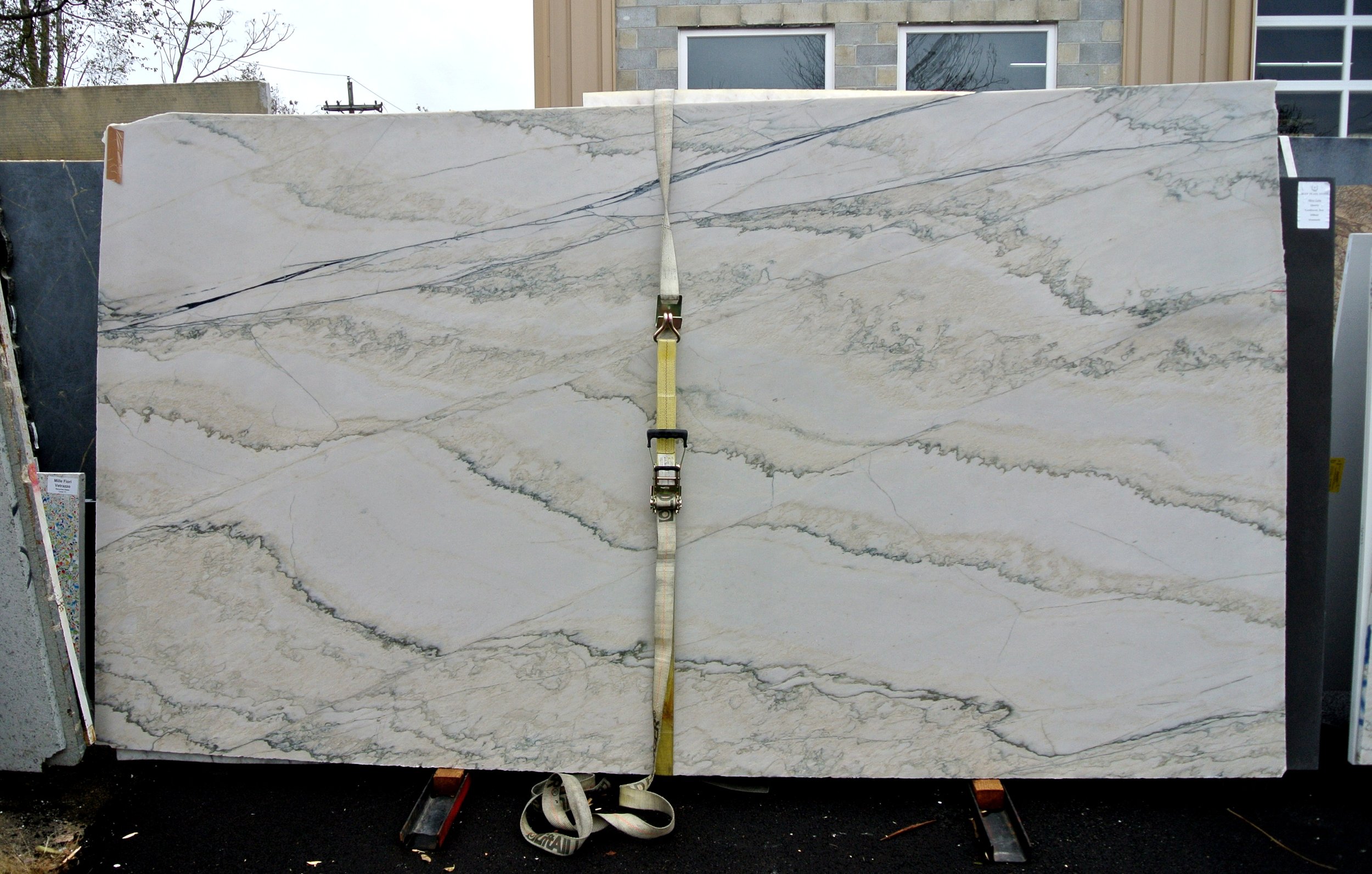


Natural Stone: Not a Game of Perfect
Here at Blue Pearl Stone, we are yet to see a perfect slab of natural stone. This is not because of some mystical curse or an outlandish series of mishaps. Natural stone, by nature, is always imperfect.
It might have been Dale Clevenger, former principal horn of the Chicago Symphony Orchestra, who at one point during his illustrious career surprisingly said that he is yet to perform a perfect concert. Whether it was truly him who said it, this sort of notion really hits close to home: here at Blue Pearl Stone, we are yet to see a perfect slab of natural stone.

Naturally occurring crack in a slab of Zsa Zsa quartzite
This is not because of some mystical curse or an outlandish series of mishaps. Natural stone, by nature, is always imperfect. There will most likely be a slightly brownish patch somewhere on a beautiful white Carrara marble, a tiny pit in a Luna Pearl granite slab, and amongst the undulating wave-patterns of a Macauba quartzite you may just happen upon a cloudy patch. Natural stone just won’t stand up to the fastidious scrutiny of perfectionists.

Pits filled with resin in a slab of Noce Travertine
And it really shouldn’t. The real beauty of any natural stone comes from its unabashed uniqueness. Natural stones are either formed under subterranean pressure, are a result of sedimentation or a product of volcanic activity. But wherever they might come from, the thousands and millions of years that it takes for these stones to form means that each slab is exposed to the caprices of time and stands as a testimony to all the events that occurred during its formation: a slight drift in the tectonic plates, a trapped and fossilized organism here and there, or the leaking of an uncommon material into the ossifying sediment. You name it.

Rock sedimentation at the blue lias cliffs at Lyme Regis - Wikipedia
In granite, for example, there’s a mineral called biotite, which is softer than granite's other components. The main components of granite, feldspar and quartz (the mineral), have the hardness of about 6.5-7 on the Mohs scale. But biotite's is only 2.5. This means that biotite flakes and crumbles more easily compared to the other minerals, sometimes leaving tiny pits behind. Yet, this by no means compromises the integrity and durability of granite.

Fissures and pits filled in with epoxy resin in a slab of Noce Travertine
Or take fissures for instance: fissures are natural cracks that can be found in the surface of stones. Most are almost undetectable, but some are wide enough that quartz bits and epoxy resin are required to fill them in. Mining companies extract stone out of the ground in large cubes (see video), then slice the cubes up like bread. Cracks can occur during these processes, but if the accidental crack doesn’t entirely damage the integrity of the stone, it’s immediately restored with resin, and can go on the market.
We've also received requests for service calls regarding cloudy patches on countertops. In certain natural stones there will be areas that have a slightly different composition than the rest, and which, accordingly, take polish differently. The results are occasional cloudy patches and they, too, are perfectly natural.
For some inspiration and encouragement, let us suggest an article by Faith Durand, blogger and author of several cookbooks, in which she elaborates on her penchant for so-called etchings. While etchings are man-made marks on countertops, the accepting and easygoing approach of a professional cook in these matters can be quite reassuring, especially for those with misgivings about purchasing natural stone products. Click on the link to read Faith Durand's "Here's What an Etch on a Marble Countertop Actually Looks Like" article, and do not hesitate to reach out to us should you have any questions.
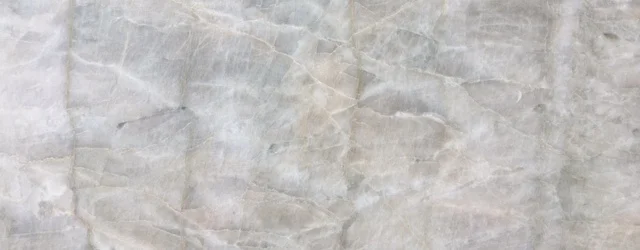
Quartz vs. Quartzite
Both quartz and quartzite are great for kitchens and bathrooms. But with any stone, the question is not about which material is better. Rather, the question is which stone is more suited for your needs.
We’re often asked how quartz and quartzite countertops exactly differ. With similar names, the question is raised with good reason. But to understand the differences between quartz and quartzite countertops, we must first clarify that the mineral “quartz” and “quartz countertop” belong to two different categories.
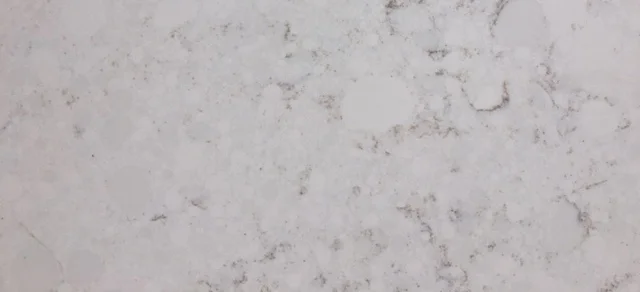
Quartz surfaces are non-porous and require no sealing
Quartz: mineral and countertop
In geology, “quartz” refers to one of the most abundantly occurring minerals in Earth’s surface. More strictly speaking, it refers to the chemical compound silica, i.e. silicon dioxide (SiO2). When looking at quartz as a mineral, you’ll find that granite, onyx, quartz, slate and soapstone countertops all contain the mineral quartz in varying degrees.
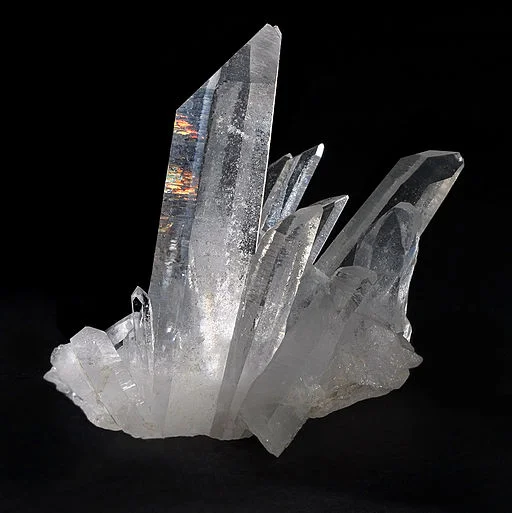
Quartz crystal cluster
But when we speak of quartz countertops in the stone industry, we are talking about a manufactured product, sometimes referred to as “engineered stone.” Quartz countertops are produced by using loose quartz, mineral pigment and an industrial resin binder. Since there is over 90% of loose quartz content in quartz countertops, the stone industry simply refers to these surfaces as “quartz.”
Quartz: Features
Given that quartz surfaces are man-made, they come in any color and pattern imaginable. Keep in mind, though, that quartz countertop patterns are often more uniform and repetitive than the patterns of natural stones. Since industrial resin binds the quartz minerals together, the countertop's surface is non-porous and requires no sealing; however, quartz countertops are sensitive to heat above 300 degrees Fahrenheit. In addition, quartz is more flexible than quartzite, less prone to chipping, and out of all the surfaces, maintaining quartz countertops is by far the easiest.

Quartz surfaces are sometimes referred to as "engineered stone"
What is quartzite?
Quartzite is a naturally occurring metamorphic rock that began its life as pure quartz sandstone. Over millions of years, sandstone morphs into quartzite under the extreme pressure and heat underneath the surface of the Earth.

Pink and red hues in quartzite are due to the presence of iron oxide
Quartzite: Features
Due to its natural origins, no two slabs are the same. The color range of quartzite countertops usually falls within the white, gray and beige spectrum. However, pink and red hues are common due to the iron oxide in the stone, as well as yellow, blue, green and orange hues that are a result of other naturally present minerals. Because of the subterranean pressure that helps form quartzite, the slabs have streaked patterns similar to marble. Quartzite is heat resistant and slightly harder than granite. Quartzite surfaces are sometimes porous, which means that they require periodic sealing and more meticulous care than quartz surfaces.
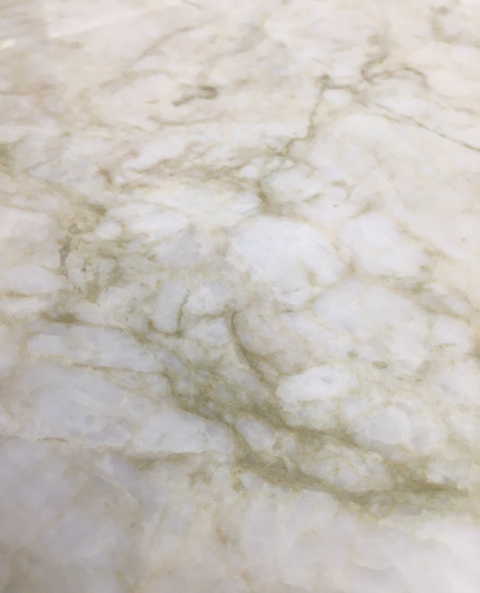
Quarzite has streaked patterns similar to marble
Conclusion
Both quartz and quartzite are great for kitchens and bathrooms. But with any stone, the question is not about which material is better. Rather, the question is which stone is more suited for your needs. Both quartz (Mohs scale of mineral hardness: 7) and quartzite (Mohs: 7-8) are comparable and often harder than granite (Mohs: 6.5-7). With quartz, you get a low-maintenance surface that comes in a myriad of colors, even though it isn't fully heat resistant. With quartzite, you get the unique look of natural stones and a harder, more durable surface, although periodic sealing is suggested. In terms of pricing, it all depends on the project at hand. However, if there are a lot of small details in your design, quartzite might put a heavier strain on your purse, given that the stone's hardness usually translates into more labor.
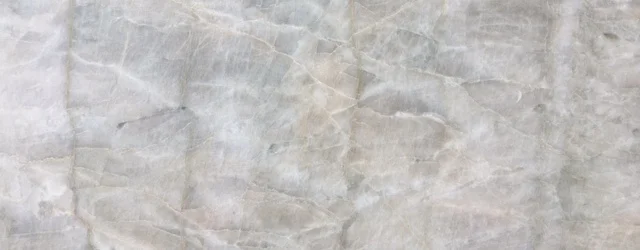
Quartzite has the unique look of natural stones
Quartz |
Quartzite |
|
|---|---|---|
| Source | Man-made | Natural |
| Color | Large spectrum | White, gray and beige |
| Pattern | Any pattern | Similar to marble |
| Natural streaks | ||
| Hardness | Mohs Scale: 7 | Mohs Scale: 7-8 |
| Maintenance | Minimal care | Simple care |
| No sealing required | Requires periodic sealing | |
| Heat resistant | No | Yes |

New Arrivals - July 26, 2016
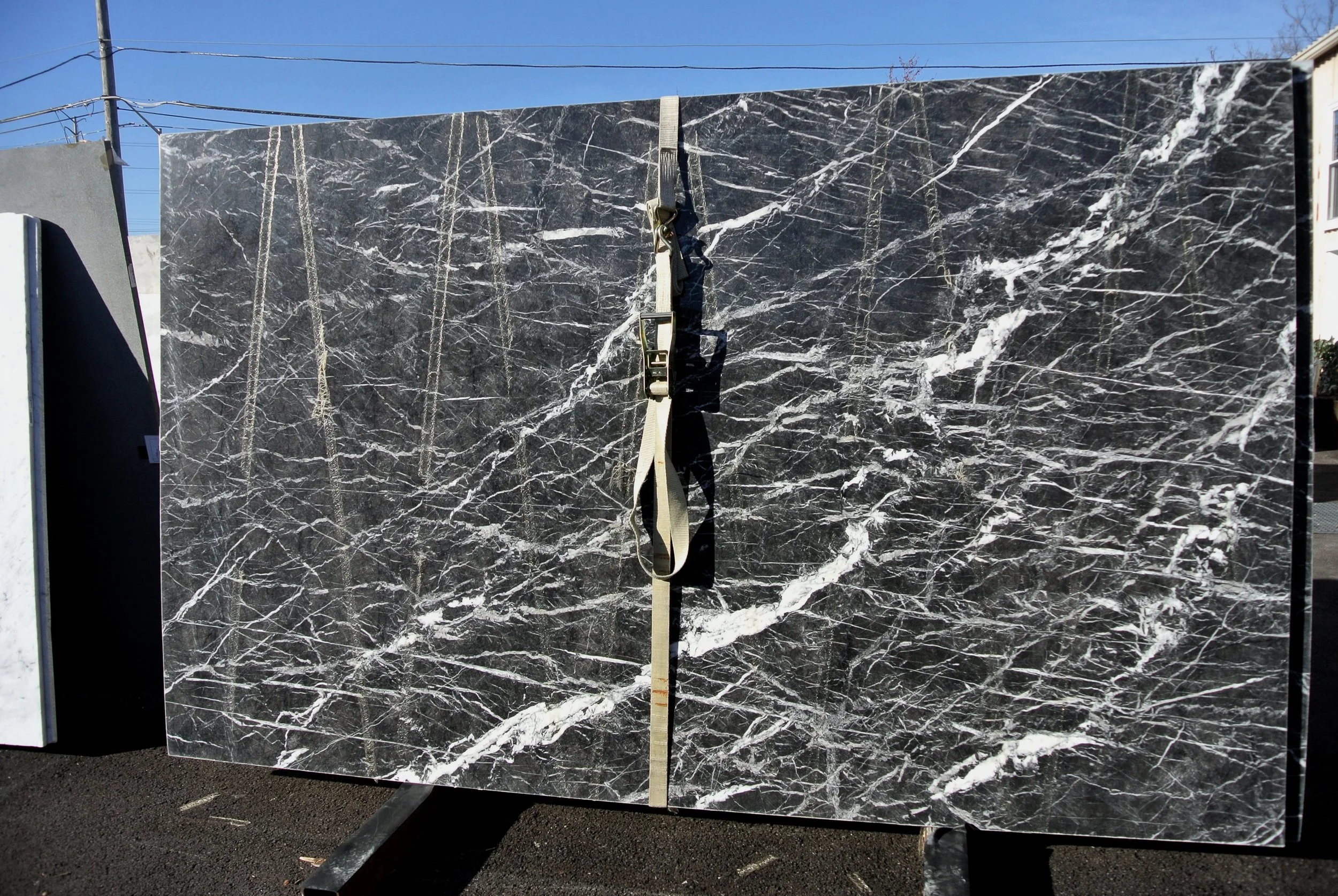
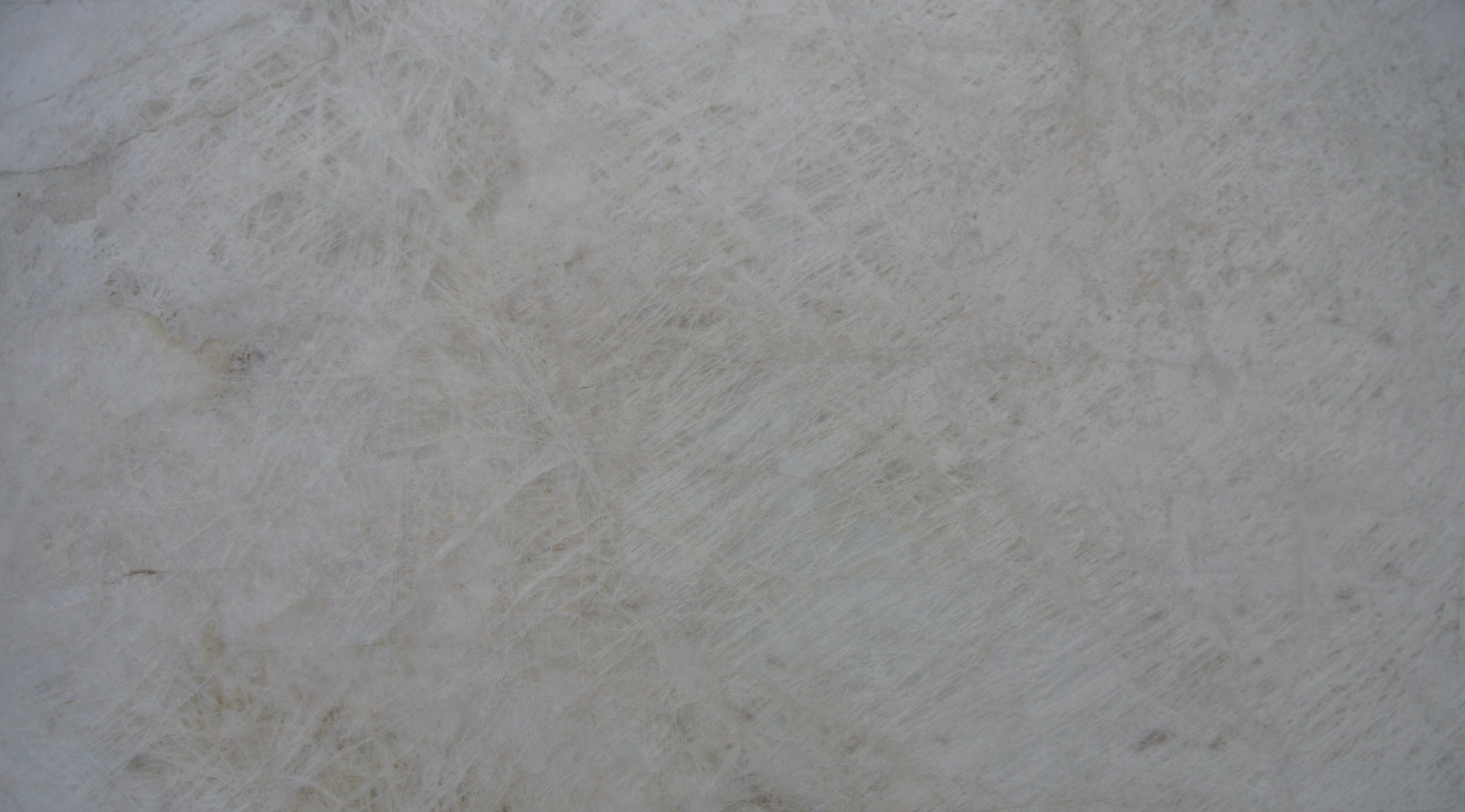
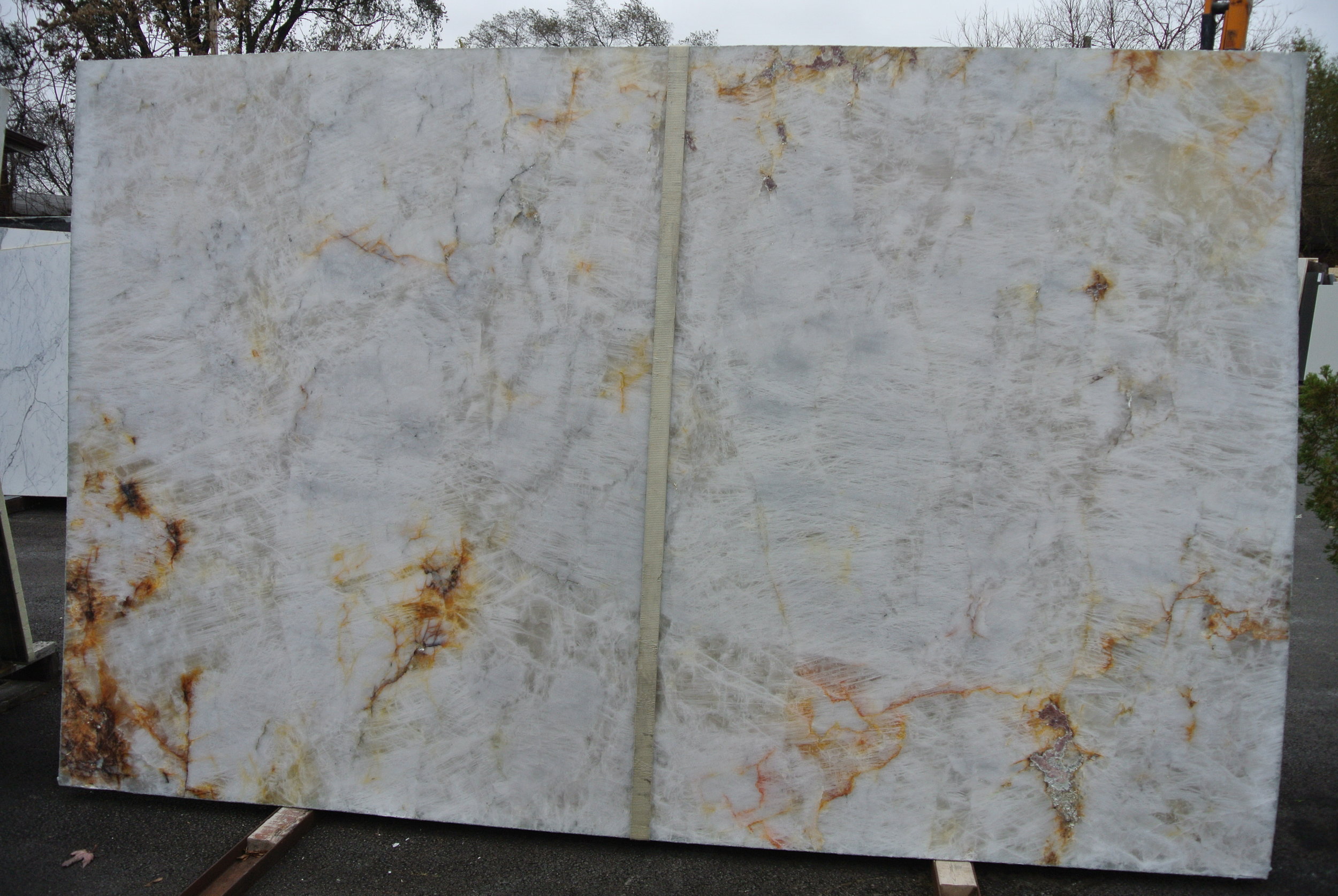
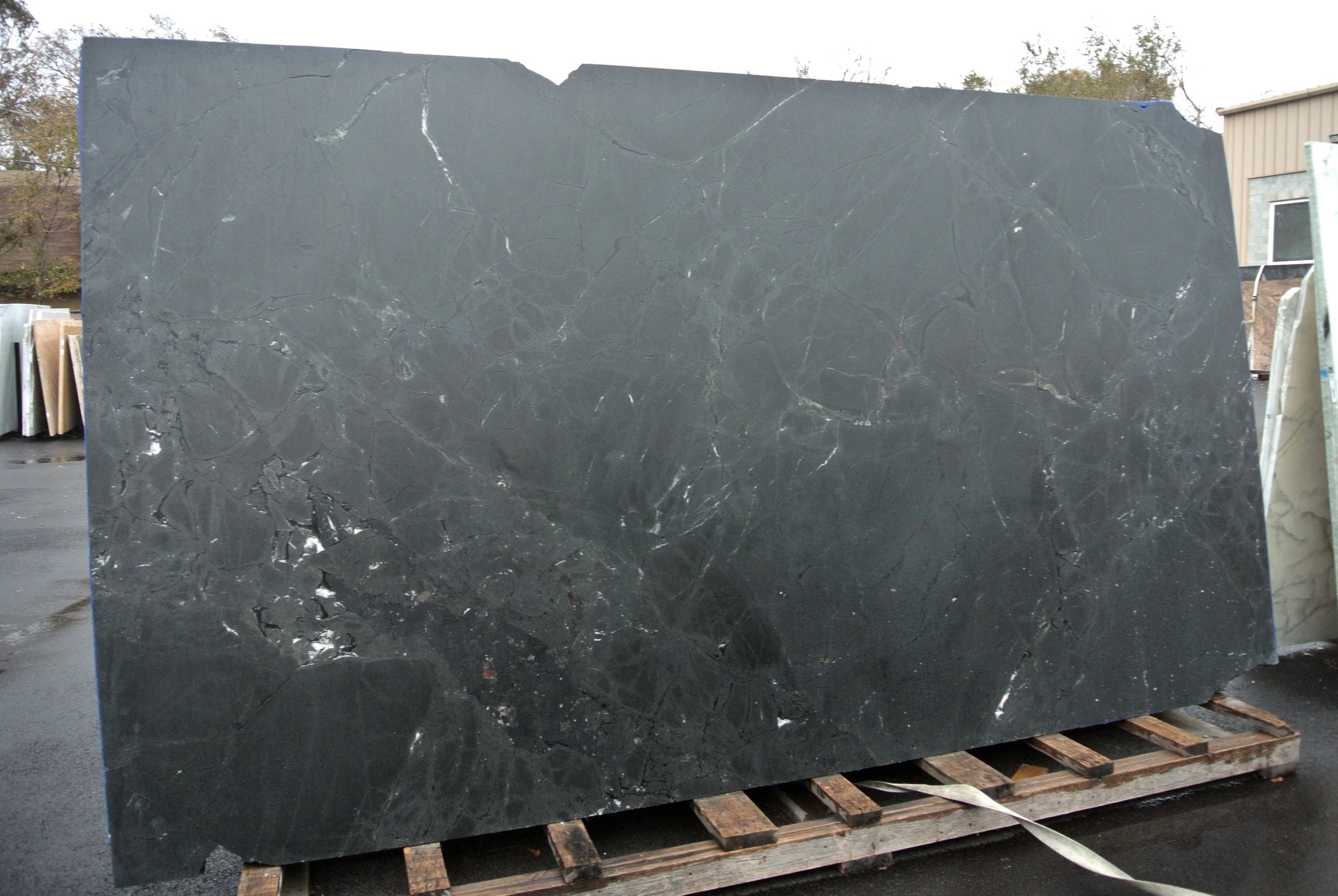
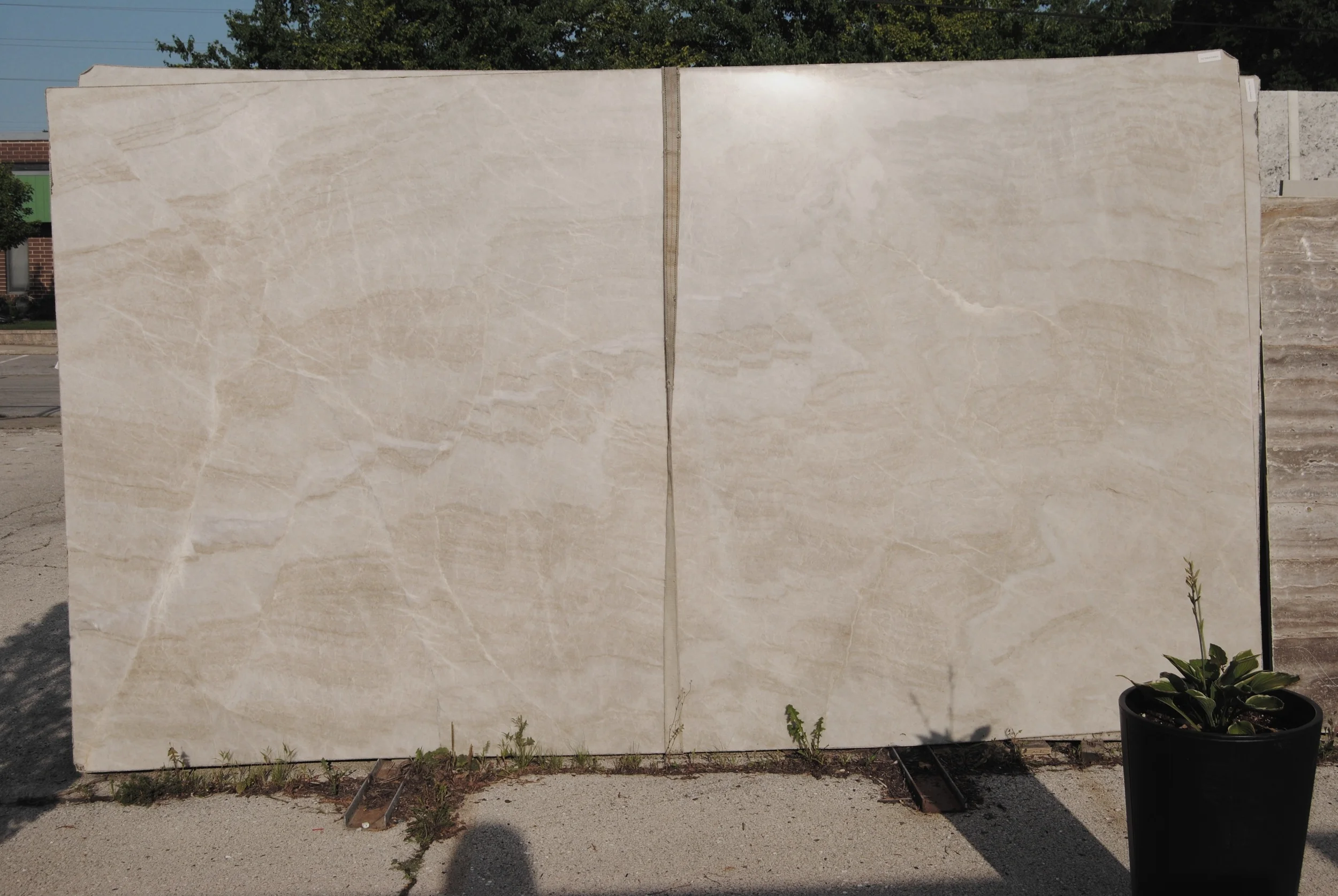
We are delighted to share with you a sampling of our latest eye-catching arrivals that include these nine gorgeous marble, granite, quartzite and soapstone slabs.
We are delighted to share with you a sampling of our latest eye-catching arrivals that include these nine gorgeous marble, granite, quartzite and soapstone slabs.


Come visit us in La Grange to see our colorful selection or email us any time. For more information please see our Contact page.